You've built a following on X. Your posts get replies, retweets, and fresh followers rolling in week after week. But when you look at your bank account, the connection between audience size and actual income feels broken. Most creators find themselves in this exact position: they have followers, but no clear path to convert them into revenue.
The creator economy is real and growing, with multiple ways to earn from an engaged audience. Yet follower count alone doesn't guarantee income. The gap exists because most creators build their audience reactively, posting what feels right, without a deliberate strategy for how followers become customers or paying subscribers. This disconnect costs creators months or years of wasted effort.[1] For a deeper look, see How to Turn Twitter Followers Into Email Subscribers. For a deeper look, see How to Get Your First 1K Twitter Followers (Step-by-Step).
This article walks you through building an intentional revenue roadmap, a step-by-step plan that connects your audience growth to actual monetization. You'll learn how to identify which of your followers are most likely to convert, what revenue models fit your content, and how to structure your posts and offers so income flows naturally from the audience you've already built. Most creators guess at what resonates with their audience, wasting weeks on formats that never compound, ClimbX analyzes your top-performing posts and scans winning posts in your niche, then uses those signals to draft new posts in your voice that actually convert followers to customers.
TL;DR
- Pick a monetization model that aligns with your niche and audience expectations, then build consistent trust through valuable content before asking for revenue.
- Test what resonates with your followers, engagement patterns, content formats, and messaging, then optimize based on what actually converts, not assumptions.
- Most creators skip the trust-building phase and pitch too early; sustainable revenue comes from proving value first, then introducing monetization naturally.
Understanding X Monetization Models for Creators
What Are X Monetization Models?
X monetization refers to the various revenue streams available to creators who build an audience on the platform. These models include advertising revenue from impressions, sponsored content partnerships with brands, digital product sales like courses or templates, service offerings such as consulting or coaching, and community memberships that provide exclusive access to followers. Each model operates differently and suits different audience sizes, niches, and creator goals. Rather than relying on a single income stream, successful creators often combine multiple models to diversify their earnings and reduce dependence on any one revenue source.[2]
Why Monetization Models Matter for Solo Creators
Understanding the range of monetization options is crucial because follower count alone does not determine earning potential. Two creators with identical follower numbers may generate vastly different revenue depending on which models they employ, how engaged their audience is, and how well they align their offerings with their community's needs. Audience trust and genuine engagement form the foundation of sustainable monetization, followers who actively interact, share content, and value what you create are far more likely to support you financially. This means that building real relationships with your audience is more important than chasing vanity metrics.[2]
The Creator Economy Landscape
The creator economy has expanded significantly, with multiple revenue pathways now available to those building audiences online. Creators no longer depend solely on platform ad-sharing programs; instead, they can leverage sponsorships, sell their own products and services, and cultivate paying communities. This diversification reflects a broader shift where audience size matters less than audience quality and creator strategy. Solo creators and solopreneurs who understand which models align with their strengths and audience composition can build sustainable income without needing millions of followers or guessing blindly at what works.[2]
Step-by-Step Process
1. Define your monetization model based on niche and audience size
Assess your current follower count, engagement rate, and audience demographics to determine which revenue streams fit your stage. Solo creators with smaller audiences often thrive with direct services, digital products, or sponsorships aligned to their niche. Larger audiences unlock affiliate commissions, premium subscriptions, or advertising partnerships. Map your niche expertise against audience needs, if your followers are asking specific questions or facing common problems, that's your monetization signal. Document your audience's pain points and willingness to pay before committing resources to any model.
2. Create content that builds trust and demonstrates value
Publish consistent, high-quality content that solves real problems for your audience. Share frameworks, case studies, or actionable insights that showcase your expertise without requiring a paywall. Trust is the foundation of monetization, audiences buy from creators they believe in. Use your Twitter presence to educate, not just promote. Test different content formats (threads, videos, case studies) to see what resonates. Track which posts drive the most replies, retweets, and clicks. This engagement data reveals what your audience values most and where monetization opportunities naturally emerge.
3. Test, measure, and optimize based on engagement and conversion signals
Launch a low-risk monetization test, offer a small digital product, a limited-time service, or a free-to-paid funnel to a segment of your audience. Monitor which content pieces drive clicks to your offer, how many visitors convert, and at what price point. Use analytics tools to track traffic sources, time spent, and drop-off points. Iterate based on what works: double down on high-converting content angles, pause underperforming offers, and refine your messaging. Measure not just sales but also email signups, webinar attendance, or community engagement as leading indicators of future revenue.
4. Scale your revenue model once validation signals confirm demand
After your initial test shows consistent conversions or strong engagement signals, expand your offer to your full audience. This might mean increasing the price, adding a premium tier, or launching a new product line based on audience feedback. Reinvest early revenue into content creation, audience growth, or tooling that lets you serve more people without proportional time investment. Document your process so you can replicate success across multiple offers. Sustainable monetization comes from solving problems at scale, not from one-off sales.
How This Works in Practice
Example 1: The SaaS Founder's Early Monetization
Picture a SaaS founder who has spent several months posting daily threads about productivity workflows, slowly building a loyal following on X. At first, the audience is small, a few hundred engaged followers, and monetization feels premature. Rather than waiting for a follower milestone, she launches a low-cost digital guide priced at a flat fee, promoted through a pinned post and a short thread series. Within weeks, a handful of buyers trickle in, validating that her audience trusts her recommendations. She then uses that proof to open a waitlist for a lightweight SaaS tool, converting her most engaged followers first. By the time she announces the full launch, she already has paying early adopters, no guesswork, no cold outreach.
Building Revenue: Do's and Don'ts
| Practice | Do | Don't |
|---|---|---|
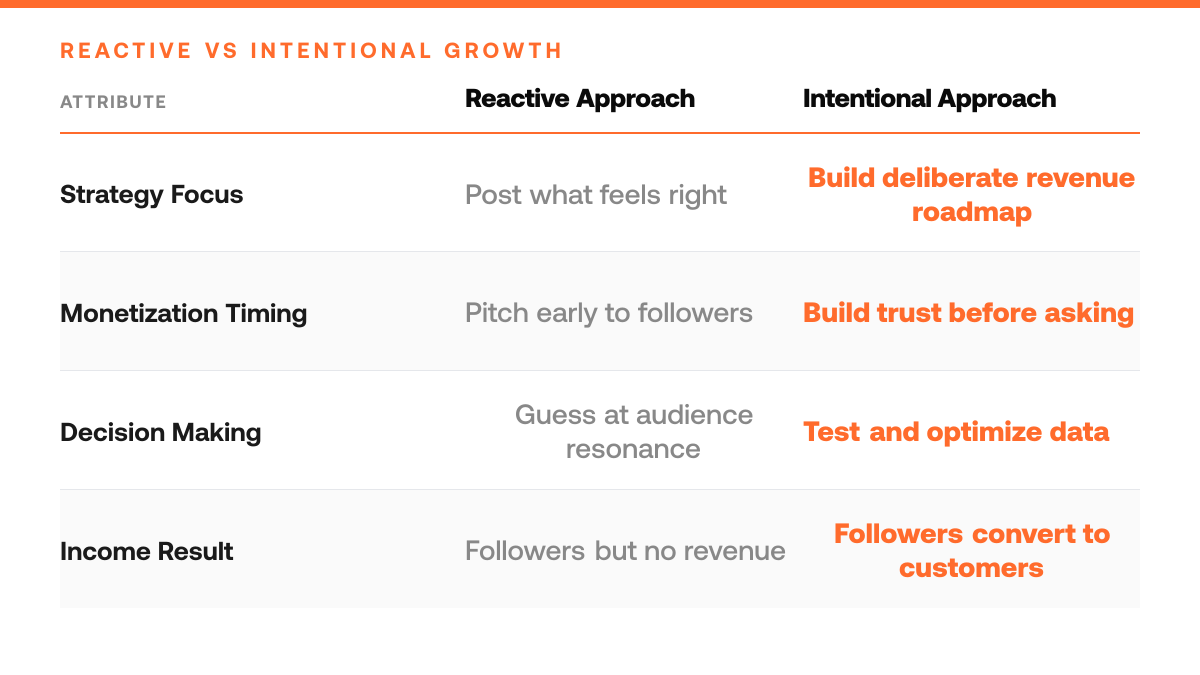
| Trust Building | Prove value through consistent, valuable content before asking for revenue | Skip trust-building and pitch to followers immediately |
| Monetization Selection | Pick a model aligned with your niche and audience expectations | Guess at what resonates or chase every available revenue stream |
| Testing & Optimization | Test content formats and messaging, then optimize based on actual conversion data | Assume what works without analyzing engagement patterns |
| Income Diversification | Combine multiple revenue models to reduce dependence on any single source | Rely solely on follower count or a single monetization pathway |
Example 2: The Coaching Creator's Tiered Revenue Path
Consider a solo career coach who posts 3 to 5 times a week on X, mixing short-form tips with occasional long-form threads about job search strategy. After a few months, she notices her reply threads consistently outperform her broadcast posts, signaling a highly engaged niche audience. She starts with a free email newsletter to deepen the relationship, then introduces a low-ticket workshop priced accessibly enough to attract dozens of buyers. Over the following month, she uses testimonials from workshop attendees to pitch a higher-ticket 1-on-1 coaching package to a smaller, warmer segment. Each tier feeds the next, the free content builds trust, the workshop filters serious buyers, and the coaching offer converts the most committed. The whole funnel runs from her X presence outward.
Why the Funnel Starts with Trust
Both paths share a common thread: monetization follows trust, not follower count. Start small, validate early, and let each offer open the door to the next.
Pre-Launch Monetization Checklist
- Define your target audience on X, identify the specific creator, business owner, or professional segment most likely to buy from you.
- Document your unique value proposition in one clear sentence that explains why followers should choose your offer over alternatives.
- Select a monetization model (digital products, services, sponsorships, or affiliate) and confirm it aligns with your audience's needs.
- Build a content calendar for the next several weeks that balances audience-building posts with value-driven content tied to your offer.
- Set up basic measurement tracking, define which metrics (followers, impressions, clicks, conversions) you'll monitor weekly to assess progress.
Common Mistakes to Avoid
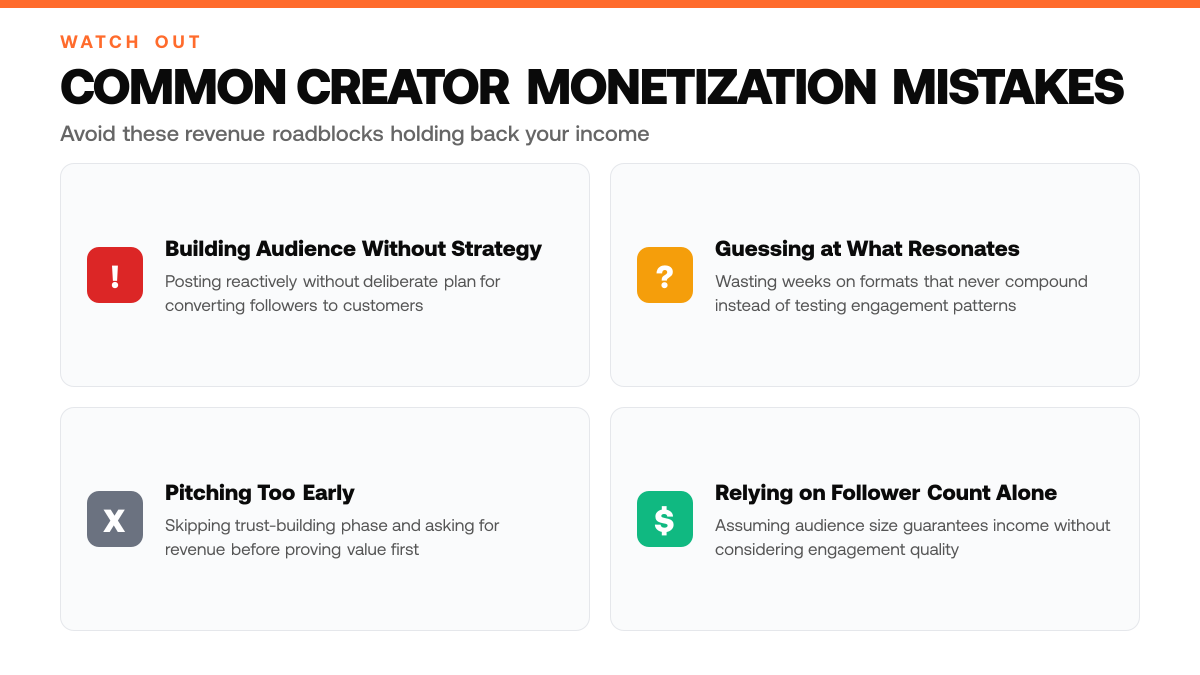
Mistake: Growing followers without tracking engagement metrics
Chasing follower count alone creates a hollow audience that won't convert to customers. Solo creators often accumulate passive followers who never interact with or buy from their content. Fix this by measuring engagement rate, click-through rate, and conversion rate from your posts, not just follower growth. Focus on attracting an audience that actually engages with your work and shows buying intent.[1]
Monetization Models: When to Use Each
| Model | Best For | Key Requirement |
|---|---|---|
| Advertising Revenue | Creators with large, consistent impression counts | High volume of engaged followers viewing posts regularly |
| Sponsored Content | Creators with niche authority and brand alignment | Audience trust and authentic fit with sponsor offerings |
| Digital Products | Creators offering courses, templates, or downloadable resources | Proven demand from audience and clear product-market fit |
| Service Offerings | Creators providing consulting, coaching, or specialized expertise | Demonstrated credibility and direct relationship with audience |
| Community Memberships | Creators with loyal followers seeking exclusive access | Consistent content production and engaged subscriber base |
Mistake: Choosing a monetization model mismatched to your audience size
Many creators attempt sponsorships or ad networks before they have the audience depth to support those models, wasting time on platforms that won't approve them or pay meaningfully. Your monetization strategy must align with your current follower count and engagement level. Start with direct sales, digital products, or service offerings that work with smaller audiences, then graduate to sponsorships or ads as your reach grows.[1]
Mistake: Publishing content without measuring what actually drives sales
Without tracking which posts, topics, or formats lead to revenue, you're guessing at what works and repeating what doesn't. This wastes weeks of effort on low-performing content. Set up conversion tracking from your posts to sales, document which content types your audience buys from, and double down on those patterns. Let data, not intuition, guide your content strategy.[1]
Frequently Asked Questions
How many followers do I need before I can monetize on X?
There's no universal minimum, monetization eligibility depends on the model you choose. Direct sponsorships and brand deals may require only a few hundred engaged followers, while X's official ad-revenue share program has specific account-level thresholds. The key is audience quality over quantity: a niche community of a few hundred highly engaged followers often converts better than thousands of passive ones. Start exploring partnerships early; many creators monetize before hitting major follower milestones by proving consistent engagement and audience relevance.
What's the fastest way to start earning from my X audience?
Sponsorships and affiliate marketing typically generate revenue faster than waiting for algorithmic payouts. These models let you pitch to brands or promote products immediately, regardless of follower count. The speed depends on your niche clarity and audience trust, if your followers see you as an authority, brands will approach you sooner. Direct monetization programs require more followers and engagement metrics, making them a longer play. Layer multiple models together to accelerate earnings: start with affiliates while building toward sponsorships.
How do I know which monetization model fits my niche?
Analyze what your audience actually engages with and what problems they face. If your followers ask questions or seek recommendations, affiliate marketing and sponsorships align naturally. If you create educational or entertainment content that drives consistent impressions, ad-revenue sharing becomes viable. Review your top-performing posts, do they showcase products, teach concepts, or spark discussion? Your content type and audience behavior reveal which models will feel authentic and convert. Test multiple approaches simultaneously; your niche will signal which one sticks.
Start your 7-day trial
Grow on X without sounding like everyone else. The right tool learns from your top posts and the leading voices in your niche, then drafts content in your voice. You edit, approve, and ship.
Start free trialSources
Read next
- How to Research Social Media Content Without Spreading Bad Information - A practical source-first research workflow for social posts: find useful ideas, evaluate evidence, use AI without inventing claims, and publish content you can defend.
- X Posts in Google Search Console: The New SEO Opportunity - Google Search Console can now track the queries, impressions, clicks, CTR, and position of your X posts. Here is how creators can turn social posts into a measurable SEO and AI-search research loop.