A creator wakes up to find their account locked. No warning, no email, just a suspension notice. For someone building an audience and revenue stream on X, account suspension ranks among the most disruptive enforcement actions the platform can take. It halts your ability to post, engage, and monetize overnight.
The good news: suspensions don't happen randomly. X enforces its rules consistently against specific violations, from coordinated inauthentic behavior to hate speech to platform manipulation. Understanding what triggers enforcement action is the first step toward protecting your account and keeping your growth on track.
This article breaks down five of the most common violations that lead to account suspension on X. Each one is identifiable, avoidable, and clearly tied to the platform's enforcement policies. Knowing where the line is drawn helps you build an audience without guessing whether your content crosses it. Most creators don't realize their suspensions stem from accidentally mimicking viral tactics that cross unspoken platform lines, ClimbX scans top performers in your niche to surface which engagement patterns actually scale without triggering enforcement, letting you compete for reach on safe ground.
TL;DR
- Twitter suspends accounts primarily for spam, automation, hateful conduct, platform manipulation, and intellectual property violations.
- These violations range from bot-like behavior and coordinated inauthentic activity to content that violates community standards.
- Most creators don't realize automated tools and aggressive growth tactics trigger suspensions faster than organic violations.[1]
Understanding Twitter Account Suspensions and Violations
What Are Account Suspension Violations?
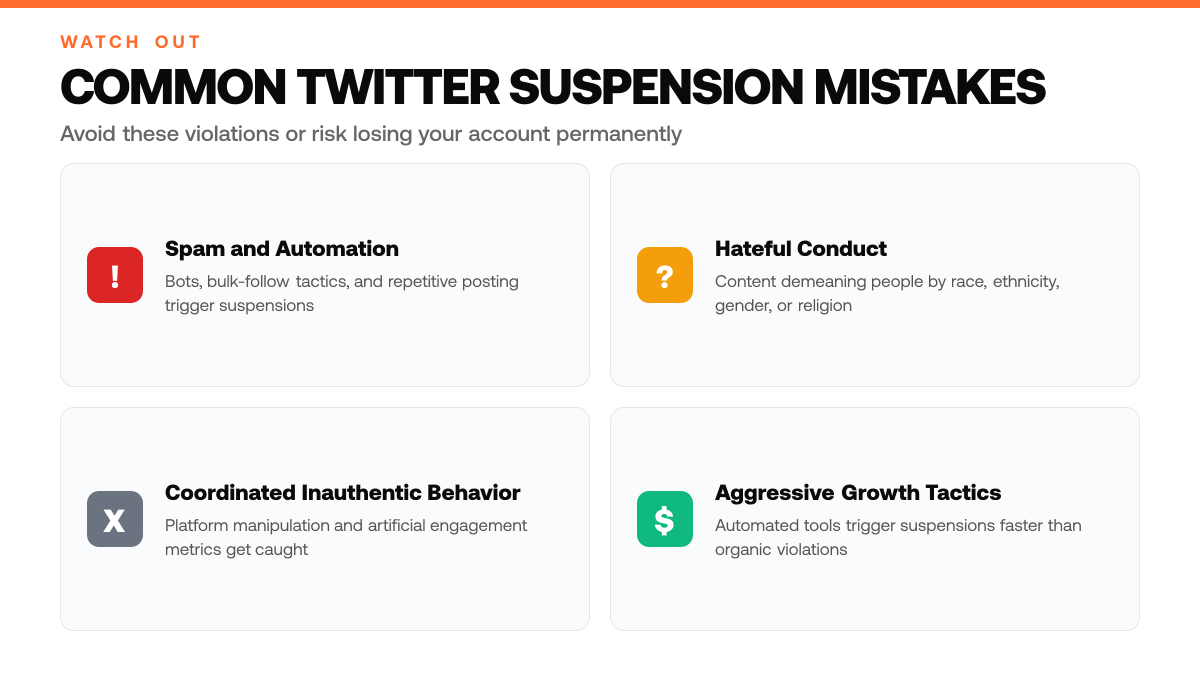
Account suspension violations on X occur when users breach the platform's terms of service through specific behaviors. Spam and automation violations happen when accounts use bots, bulk-follow tactics, or repetitive posting designed to artificially inflate engagement metrics without genuine interaction. Hateful conduct violations target content that demeans people based on protected characteristics such as race, ethnicity, gender, or religion, and X enforces these policies broadly across the platform. These violations represent the most common reasons creators and solopreneurs lose access to their accounts, disrupting audience growth and monetization efforts.[2][3]
Why Suspension Violations Matter for Growing Creators
For solo creators and solopreneurs building an audience on X, understanding suspension violations is critical to sustainable growth. A suspended account means lost access to followers, impressions, and the revenue streams tied to audience influence. Unlike temporary restrictions, suspensions can be permanent, erasing months or years of relationship-building with your audience. Knowing which behaviors trigger enforcement helps you avoid costly mistakes and focus your energy on authentic engagement strategies that actually build trust and loyalty with your followers.
The Broader Context of Platform Enforcement
X's enforcement of violations reflects a broader industry shift toward stricter content moderation and bot detection. Platforms increasingly use automated systems combined with human review to identify accounts that violate policies, making it harder for bad actors to game the algorithm. This environment rewards creators who build genuine audiences through consistent, authentic content rather than shortcuts. Understanding the landscape of violations helps you position yourself as a trustworthy voice in your niche and aligns your growth strategy with how the platform actually operates.
Key Numbers for Why Twitter Accounts Get Suspended: 5 Common Violations (2026)
- Over 4 million account suspensions occurred on X between July and December 2024, with over 10.1 million posts removed or labeled.[1]
- 940,000+ X accounts were suspended for abuse, harassment, and hateful content in H2 2024.[1]
- 722,557 accounts suspended for misleading or deceptive identities between July and December 2024.[1]
- Over 500,000 X accounts suspended for buying or selling illegal or regulated goods and services in H2 2024.[1]
- X is used by approximately 557 million people each month in 2026.[1]
Step-by-Step Process
1. Audit your account for risky behaviors
Review your posting history and engagement patterns for actions that may trigger X's enforcement system. Look for automated or bulk posting, repetitive replies, excessive hashtags, or rapid-fire tweets that could resemble spam. Check whether you're using third-party automation tools that violate platform rules. Document any behaviors you identify so you can correct them before they escalate to suspension.[4]
2. Review X's enforcement policy directly
Visit X's official policy documentation to understand the specific rules governing account suspension. Familiarize yourself with prohibited behaviors including harassment, hateful conduct, platform manipulation, and intellectual property violations. Knowing the exact boundaries helps you align your content strategy with platform expectations and reduces the risk of unintentional violations.[4]
3. Document your content strategy for compliance
Create a written record of your posting schedule, content themes, and engagement approach. This documentation serves as evidence of intentional, authentic behavior rather than bot-like activity. When you can show a consistent, human-driven strategy, you demonstrate good faith compliance and build a defense against false suspension claims.
4. Submit an appeal with evidence of corrected behavior
If your account is suspended, understand the specific violation cited in X's notice. Prepare an appeal that acknowledges the violation, explains what you've changed, and provides evidence of your corrected behavior. Include your documented content strategy and any steps you've taken to prevent future violations. Submit your appeal through X's official support channels with clear, honest communication about how you've addressed the issue.[4]
How This Works in Practice
Example 1: The Growth Hacker's Accidental Pod Violation
Picture a creator who's been posting consistently for months but feels stuck at a modest follower count. Frustrated with slow organic growth, they join an engagement pod, a private group where members agree to like, retweet, and reply to each other's posts within minutes of publishing. The creator posts 5 times a day and sees immediate spikes in engagement metrics. Within a week, their posts are hitting higher reach. But Twitter's algorithm detects the coordinated, artificial pattern: the same accounts interacting with their content in lockstep, at unnatural speeds, with no genuine conversation following. Twitter flags the account for platform manipulation. The creator's posts stop appearing in feeds, their reach plummets, and within days they face a suspension notice. They never intended to violate policy, they thought they were just "helping" other creators, but the coordinated behavior triggered the exact detection system designed to catch it.
Common Violations: Do's vs Don'ts for Safe Growth
| Violation Type | What to Avoid | What to Do Instead |
|---|---|---|
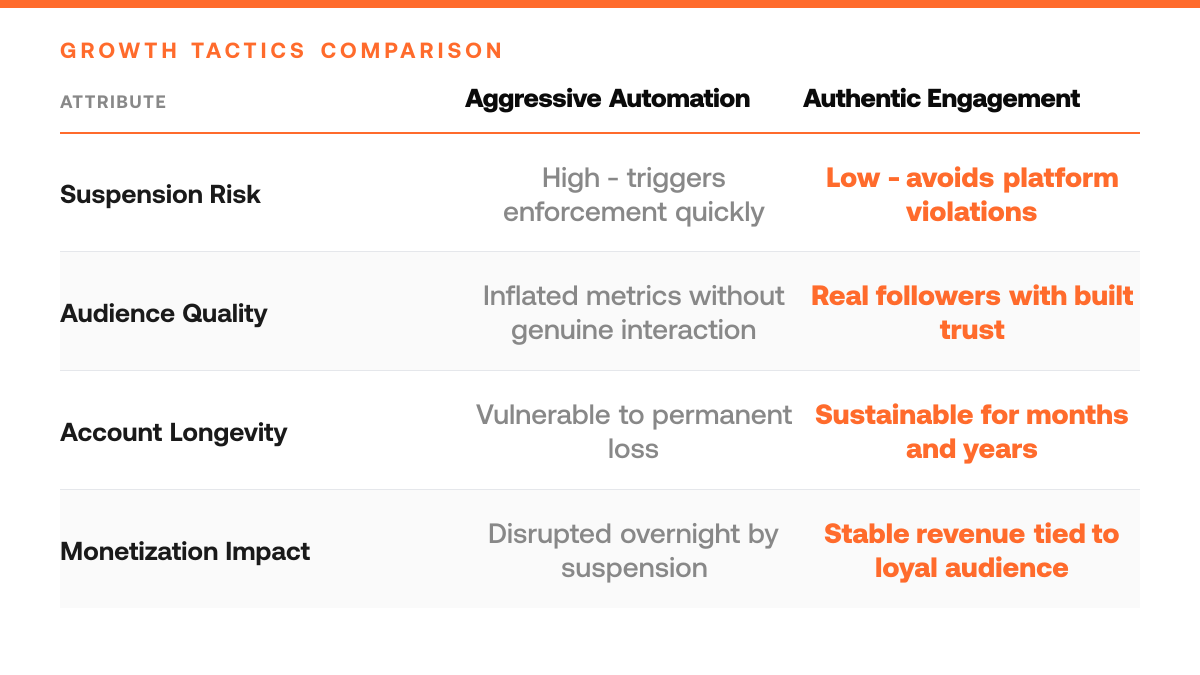
| Spam and Automation | Use bots, bulk-follow tactics, or repetitive posting to inflate metrics | Engage authentically with genuine followers through consistent, original content |
| Hateful Conduct | Post content that demeans people based on race, ethnicity, gender, or religion | Build trust by creating inclusive content that respects all audience members |
| Platform Manipulation | Use aggressive growth tactics and shortcuts to game the algorithm | Focus on authentic engagement strategies that build genuine audience relationships |
| Coordinated Inauthentic Behavior | Coordinate fake engagement or mimic viral tactics that cross platform lines | Study top performers in your niche to identify engagement patterns that scale safely |
Example 2: The Boundary-Crossing Monetization Push
Consider a solopreneur who's built a following and wants to monetize faster. They start aggressively promoting a digital product in replies to viral tweets, tagging unrelated accounts to boost visibility, and posting the same promotional message across multiple threads to maximize impressions. They're not breaking a single rule in isolation, self-promotion is allowed, tagging is allowed, posting multiple times is allowed. But the cumulative pattern reads as spam: repetitive promotional language, unsolicited tags, and carpet-bombing the same offer across unrelated conversations. Twitter's spam detection system flags the account as a potential bot or bad-faith actor. The creator receives a warning, then a temporary lock requiring them to delete the violating tweets. They lose momentum with their audience and waste weeks rebuilding trust, all because they misunderstood where the line between aggressive marketing and platform abuse actually sits.
Why Intention Doesn't Shield You
Both creators had legitimate goals, growing an audience and monetizing their work, but Twitter's enforcement focuses on behavior patterns, not intent. Engagement pods and aggressive promotion feel like smart tactics until the algorithm catches them. The key difference between sustainable growth and a suspension is understanding that Twitter watches for coordinated, artificial, or repetitive patterns across your entire account footprint, not individual posts. Knowing these boundaries before you hit them saves your audience and your credibility.
Pre-Launch Twitter Compliance Checklist
- Review your account bio, profile image, and pinned tweet to ensure they comply with X's platform rules and don't violate community standards.
- Audit your recent tweets and replies for engagement tactics that mimic spam, including excessive hashtags, repetitive mentions, or rapid-fire posting patterns.
- Check your follower growth rate and engagement metrics for sudden spikes that could trigger automated suspension detection systems.
- Verify your account does not use automation tools or bots to artificially inflate likes, retweets, or follower counts.
- Confirm your content does not promote prohibited topics such as hate speech, misinformation, or coordinated harassment campaigns.
Common Mistakes to Avoid
Mistake: Using follow-for-follow schemes and engagement pods to artificially boost followers
Follow-for-follow tactics and engagement pods violate X's Terms of Service because they artificially inflate metrics without genuine audience interaction. This triggers automated detection systems that flag accounts for coordinated inauthentic behavior. Instead, focus on creating original, valuable content that naturally attracts followers interested in your niche. Authentic engagement compounds over time and protects your account from suspension.[5]
Sustainable Growth vs High-Risk Tactics
| Growth Approach | High-Risk Method | Safe Alternative |
|---|---|---|
| Audience Building | Bulk-follow and automated engagement tools | Consistent, authentic content that attracts genuine followers |
| Engagement Scaling | Aggressive tactics that trigger enforcement | Engagement patterns from top performers that work without violating policies |
| Monetization Strategy | Shortcuts that risk account suspension and lost revenue | Building trust and loyalty through authentic interaction with your audience |
Mistake: Relying on bot-assisted posting tools to automate content distribution
Automated posting bots that publish content on a fixed schedule or use AI to generate engagement violate X's automation policies. These tools often trigger spam filters and account restrictions because they simulate human behavior at scale. Replace bots with a sustainable content calendar you manage manually or through X's native scheduling features, ensuring each post reflects your authentic voice and strategy.[5]
Mistake: Assuming growth hacks like mass following and unfollowing are acceptable gray-area tactics
Mass following and unfollowing accounts, even if done manually, constitutes platform manipulation that X explicitly prohibits. Accounts caught cycling followers this way face warnings, rate limits, or permanent suspension. Build your audience deliberately by engaging with relevant communities, responding to comments, and sharing insights that resonate with your target creator audience. Slow, authentic growth is the only sustainable path.[5]
Frequently Asked Questions
Can I get my suspended Twitter account back?
Yes, most first-time suspensions are temporary and appealable. If your account was suspended, Twitter typically allows you to request a review by demonstrating that you understand the rule you violated and won't repeat the offense. Permanent suspension is reserved for severe violations, but the majority of creators receive temporary suspensions with the opportunity to appeal and restore access.[6]
What's the difference between a temporary and permanent suspension?
A temporary suspension restricts your account access for a set period and is often the first consequence for rule violations. Permanent suspension is irreversible and occurs only for severe breaches of Twitter's policies. Most creators experience temporary suspensions on their first offense, giving them a chance to learn the rules and appeal the decision if they can show they understand what went wrong.[6]
How long does it take to appeal a Twitter suspension?
Twitter's appeal process doesn't have a fixed timeline, but responses typically arrive within days to a couple of weeks depending on review volume. The speed depends on how clearly you explain your understanding of the violation in your appeal. Providing a detailed, honest explanation of what rule you broke and how you'll avoid it increases your chances of a faster, successful review.
Sources
Try the loop on your own cohort.
Pick three accounts you would like to be at in 12 months. ClimbX pulls their recent outliers, tags them, and drafts in your voice off what is currently working. Edit, ship, watch the loop tighten.
Read next
- X Posts in Google Search Console: The New SEO Opportunity - Google Search Console can now track the queries, impressions, clicks, CTR, and position of your X posts. Here is how creators can turn social posts into a measurable SEO and AI-search research loop.
- X Algorithm Labels Explained: How Visibility Filtering Works - X can label accounts and posts before deciding where they may appear. See the real DoNotAmplify, SpamHighRecall, abuse, NSFW, and post-level labels in X’s open-source algorithm.