A single suspension notice can halt everything a solo creator has built on X. Your audience stops seeing your posts. Your income stream from monetization and sponsorships dries up. Followers you spent months cultivating become unreachable. For creators whose entire business lives on the platform, an account suspension isn't just an inconvenience, it's an existential threat to livelihood and growth.
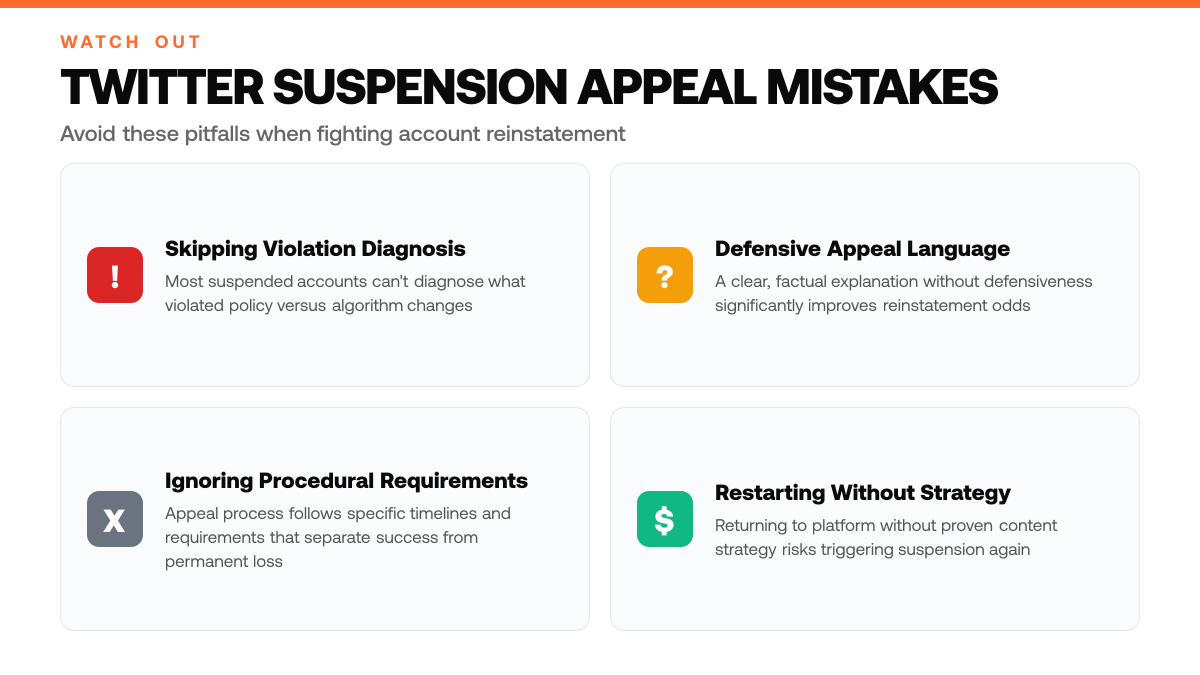
Account suspensions happen for various reasons, from policy violations to automated flagging errors. What matters most is how you respond. The appeal process isn't arbitrary, it follows specific timelines and procedural requirements that, when followed correctly, can lead to reinstatement. Understanding these requirements separates creators who recover their accounts from those who lose them permanently.
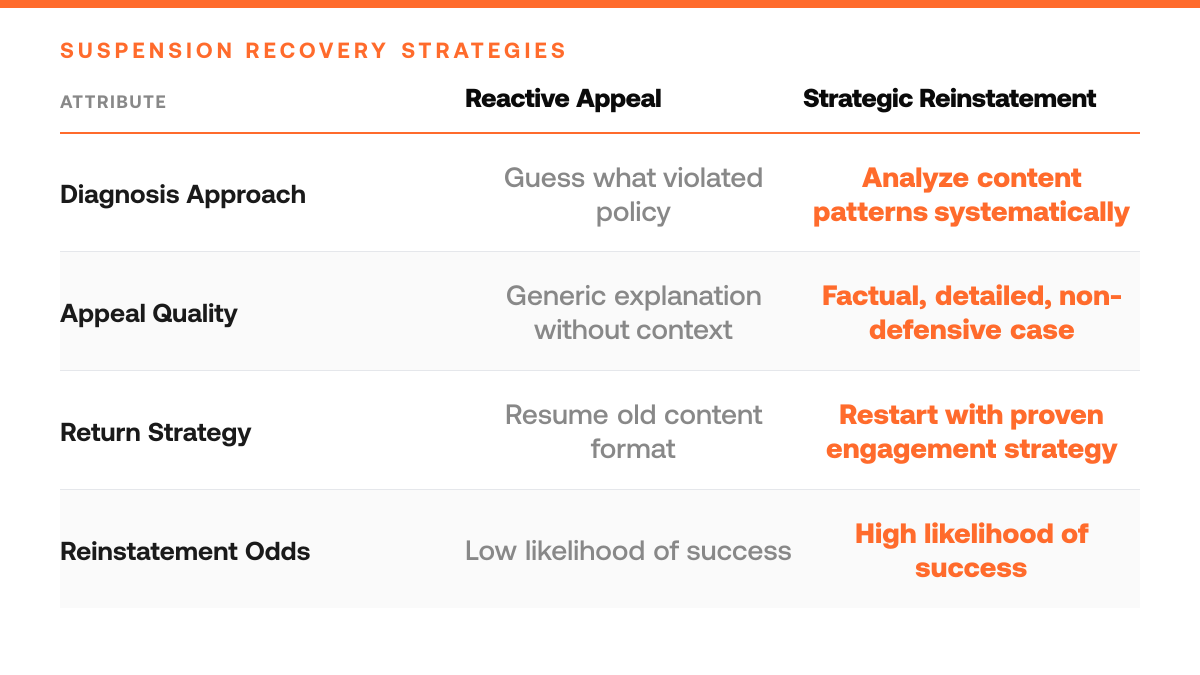
This guide walks you through the appeal process step by step: how to recognize why your account was suspended, what documentation strengthens your case, how to submit an appeal that meets X's requirements, and what to expect during review. You'll also learn how to protect your account from future suspensions so you can focus on what matters, building your audience and monetizing your influence without interruption. Most suspended accounts never rebuild because they can't diagnose what actually violated policy versus what simply stopped working in the algorithm, ClimbX analyzes your last 100 posts to isolate your highest-performing formats and hooks, so when you appeal and return, you restart with a content strategy proven to engage, not trigger.
TL;DR
- Twitter/X suspension appeals require submitting a formal request through the platform's appeal form with details about the alleged violation.
- The appeal process asks you to explain why the suspension was wrong and provide context about your account activity and content.
- Most creators miss that a clear, factual explanation without defensiveness significantly improves reinstatement odds.
Understanding Twitter Suspension and Appeal Basics
What Is a Twitter Account Suspension?
A Twitter suspension occurs when X (formerly Twitter) disables your account due to a violation of its platform policies. Unlike a temporary restriction or warning, a suspension removes your ability to post, like, retweet, or interact with other accounts until the issue is resolved. Suspensions stem from specific policy breaches, most commonly spam, automation that violates platform rules, hateful conduct, or platform manipulation tactics. Understanding which violation category triggered your suspension is essential before you attempt to appeal, as X requires you to acknowledge the specific rule you broke and demonstrate how you'll avoid repeating it.[2]
Why Suspension Matters for Solo Creators
For solopreneurs and content creators building an audience on X, a suspension can halt your growth momentum and damage the credibility you've worked to establish. Your account is often your primary asset for audience engagement, follower growth, and monetization opportunities. A suspension doesn't just pause your presence, it can signal to followers that something went wrong, potentially eroding trust. The longer your account remains suspended, the more you lose ground to competitors and miss opportunities to publish content that drives impressions and conversions. Quick, informed action on an appeal can mean the difference between a brief setback and permanent loss of your platform presence.
Common Suspension Triggers and Appeal Strategy
Most suspensions fall into predictable categories: aggressive automation (like bot-driven follows or mass unfollows), spam behavior (repetitive posting or misleading links), hateful or abusive language, or coordinated inauthentic activity designed to artificially inflate engagement. Knowing which bucket your violation falls into helps you craft a credible appeal that shows you understand the rule, take responsibility, and have a plan to stay compliant. Vague appeals that don't address the specific violation rarely succeed. Creators who take time to identify their exact policy breach and explain how they'll operate differently going forward see higher reinstatement rates than those who simply apologize without specifics.[2]
Key Numbers for Twitter Suspension Appeal: Get Reinstated in 2026
- 20 - 30% reinstatement rate for appeals via @XSupport DM, compared to under 5% for repeated formal appeals.[1]
- 48 - 72 hours for straightforward suspension appeals, but complex cases can take 8 - 12 weeks or longer.[1]
- 3 - 7 business days is the standard response time for X suspension appeals.[1]
- Evidence-backed appeals are the single biggest factor in getting reinstated as of June 2026.[1]
Step-by-Step Process
1. Gather evidence of policy compliance
Collect screenshots, timestamps, and context for the content that triggered the suspension. Document your account history, including previous posts, engagement patterns, and any warnings or notices from Twitter. This evidence demonstrates your understanding of what was flagged and proves your account operated within platform rules. Organize this material chronologically so you can reference specific posts when building your appeal.[1]
2. Document your account history and context
Create a detailed record of your account activity leading up to the suspension. Note your follower growth, content themes, engagement rates, and any changes in posting behavior. Include information about your audience, the purpose of your account, and how you've contributed to the X community. This narrative helps Twitter understand your account's legitimate value and intent.[1]
3. Write a detailed response explaining the error
Compose a clear, professional appeal that addresses the specific violation cited by Twitter. Explain why the suspension was incorrect, referencing the evidence you gathered. Be concise but thorough, acknowledge Twitter's concerns while demonstrating that your account does not violate their terms of service. Avoid defensive language; instead, focus on facts and context that clarify the misunderstanding.[1]
4. Submit your appeal through Twitter's support channels
Access Twitter's appeal form or support system and submit your documented response. Follow all instructions for the submission process, including any required formats or documentation uploads. Keep records of your submission, including confirmation numbers or timestamps. Monitor your email for responses from Twitter's support team, and be prepared to provide additional information if requested.
How This Works in Practice
Example 1: The Creator Caught by Bot-Like Behavior Detection
Picture a solo creator who posts 8 times daily across multiple threads to maximize impressions on X. After 3 weeks of this cadence, their account gets suspended for automated behavior, even though every post was authentic content. They appeal through X's standard form, but the generic response arrives within days: account stays locked. The creator realizes the policy system flagged the posting frequency itself, not the content quality. When they reframe their appeal to explain their creator workflow and reduce posting to 3-4 times daily going forward, the second submission succeeds. The suspension lifts within a week, and they resume growing their audience, this time with a sustainable rhythm that doesn't trigger automated detection thresholds.
Common Suspension Triggers and Appeal Approach
| Violation Category | What Triggered It | Appeal Strategy |
|---|---|---|
| Aggressive Automation | Bot-driven follows or mass unfollows | Acknowledge the automated behavior and explain manual engagement plan going forward |
| Spam Behavior | Repetitive posting or misleading links | Demonstrate understanding of authentic content standards and commit to organic posting rhythm |
| Hateful or Abusive Language | Conduct violating community standards | Take responsibility, explain context without defensiveness, outline respectful engagement approach |
| Coordinated Inauthentic Activity | Artificial engagement inflation tactics | Clarify your authentic audience-building methods and commit to organic growth only |
Example 2: The Solopreneur Misclassified for Engagement Tactics
Consider a solopreneur building authority in a niche vertical who uses reply threads and quote tweets to engage deeply with followers' questions. X's policy system flags this as potential manipulation, grouping it under 'inauthentic engagement', and suspends the account. The creator's first appeal is rejected because they don't address the specific policy clause the system cited. On their second attempt, they document their genuine engagement pattern: real replies to real followers, no bot networks, no coordinated inauthentic behavior. They show screenshots of their authentic community interactions and clarify that their engagement strategy is core to their creator business model. The appeal succeeds, and they return to X with a clearer understanding of which tactics X monitors closely, allowing them to maintain authentic growth without triggering the same misclassification.
Why Precision Matters in Appeals
Both creators faced suspension not because they violated X's core values, but because their legitimate tactics collided with automated or overly broad policy interpretation. The difference between rejection and reinstatement wasn't luck, it was specificity. By naming the exact policy clause, explaining their creator context, and showing evidence of authentic intent, they moved from generic denials to real review. Understanding which suspension type you're facing and addressing it directly is the fastest path back to your audience.
Twitter Suspension Appeal Checklist
- Gather your original appeal rejection email and any violation notices from Twitter to confirm the suspension reason.
- Document the content flagged in your suspension and prepare a written explanation of why it does not violate Twitter's policy.
- Review Twitter's current Community Guidelines and Terms of Service to align your appeal narrative with their stated rules.
- Collect screenshots or archives of your account activity before suspension to demonstrate your account history and audience engagement.
- Prepare a clear statement of how you will comply with Twitter policies going forward if your appeal is approved.
Common Mistakes to Avoid
Mistake: Submitting a vague appeal without addressing the specific policy violation X cited
When you appeal a suspension, X identifies the exact rule you allegedly broke. Many creators respond with generic defenses like 'I didn't violate any rules' without directly engaging the cited violation. This wastes your appeal and signals to X's review team that you haven't understood or won't address the actual concern, making reinstatement less likely. Instead, acknowledge the specific violation X mentioned, explain why your content doesn't actually violate it, and reference the exact policy language from X's rules.[2]
Suspension Response: Immediate Action vs Delayed Response
| Action Type | Immediate Response (Recommended) | Delayed Response (Risk) |
|---|---|---|
| Account Assessment | Diagnose specific policy violation before appealing | Miss diagnosis, submit vague appeal that gets rejected |
| Documentation Gathering | Collect context and evidence supporting your case | Lose details, struggle to explain your account activity clearly |
| Appeal Submission | Submit formal request with clear, factual explanation | Account remains suspended longer, competitors gain audience ground |
| Future Protection | Implement content strategy proven to engage without triggering policy | Resume old patterns, risk repeated suspension and permanent loss |
Mistake: Taking a defensive or hostile tone in your appeal message
Creators often respond to suspension with frustration, sarcasm, or arguments that blame X unfairly. A combative tone signals to the review team that you may be difficult to work with and unlikely to follow guidelines going forward, even if your content was borderline. Keep your appeal professional, respectful, and solution-focused. State your case clearly without emotion, and demonstrate that you understand X's rules and will comply in the future.[2]
Mistake: Failing to provide context or evidence that supports your appeal claim
Simply asserting 'my account was suspended by mistake' isn't enough. X's reviewers need concrete evidence: screenshots of the flagged content in full context, links to the original posts, or explanations of how your content aligns with X's policy. Without this supporting material, your appeal reads as unsupported and gets denied. Always attach or reference specific examples that prove your content complies with the rules you're accused of breaking.[2]
Frequently Asked Questions
What are the chances my Twitter appeal will succeed?
Success rates vary based on the reason for suspension and the quality of your appeal. Appeals that clearly demonstrate policy compliance and provide specific context about the flagged content tend to perform better than generic requests. Twitter reviews each case individually, so your chances improve when you address the exact violation cited and explain how you'll prevent similar issues going forward.[3]
How long does a Twitter suspension appeal typically take?
Twitter's review process can take anywhere from a few days to several weeks, depending on case complexity and support volume. While some creators report faster resolutions, there's no guaranteed timeline. During this period, your account remains inaccessible, so submitting a thorough, well-documented appeal the first time increases the likelihood of a quicker resolution.[3]
What can I do to prevent future account suspensions?
Review Twitter's Community Guidelines thoroughly and audit your content for policy violations before they're flagged. Focus on avoiding spam, coordinated inauthentic behavior, hateful conduct, and platform manipulation. Maintain consistent posting practices, engage authentically with your audience, and monitor account notifications for warnings. Regular compliance checks help you catch risky content early.[3]
Sources
Try the loop on your own cohort.
Pick three accounts you would like to be at in 12 months. ClimbX pulls their recent outliers, tags them, and drafts in your voice off what is currently working. Edit, ship, watch the loop tighten.
Read next
- X Algorithm Labels Explained: How Visibility Filtering Works - X can label accounts and posts before deciding where they may appear. See the real DoNotAmplify, SpamHighRecall, abuse, NSFW, and post-level labels in X’s open-source algorithm.
- AI Content Quality: How to Improve AI Social Media Posts - A practical quality-control workflow for better AI social media content: improve the prompt, ground the draft, edit for voice, and learn from real audience response.