Your posts are getting fewer likes. Your follower count has flatlined. Engagement that used to flow in now trickles. You haven't changed your content strategy, your account hasn't been flagged, and you've received no warning from the platform, yet your reach has mysteriously collapsed. This is the shadowban: an algorithmic penalty that silently reduces your content visibility without notification.
For solo creators and solopreneurs building an audience on X, a shadowban can derail months of growth work. When impressions and follower gains stall without explanation, it's easy to assume the algorithm has turned against you or that your content no longer resonates. The reality is more specific: shadowbans are triggered by platform violations or behavior patterns, and they operate invisibly until you recognize the symptoms.[1]
The good news is that recovery is possible, but only if you diagnose the problem first. This article explains what a shadowban is, how to identify whether your account is affected, and the concrete steps you can take to restore your visibility and get back to growing your audience. Shadowbanned creators can't tell if their silence is algorithmic punishment or just poor content fit, ClimbX scans high-performing outlier posts in your niche to show you what engagement patterns actually break through, so you rebuild visibility on a proven template.
TL;DR
- A shadowban silently suppresses your tweets from search results, replies, and follower feeds, drastically reducing impressions and reach without any warning from X.
- Recovery requires identifying the ban, eliminating the behavior that triggered it, and rebuilding trust with X's algorithm through consistent, policy-compliant posting.
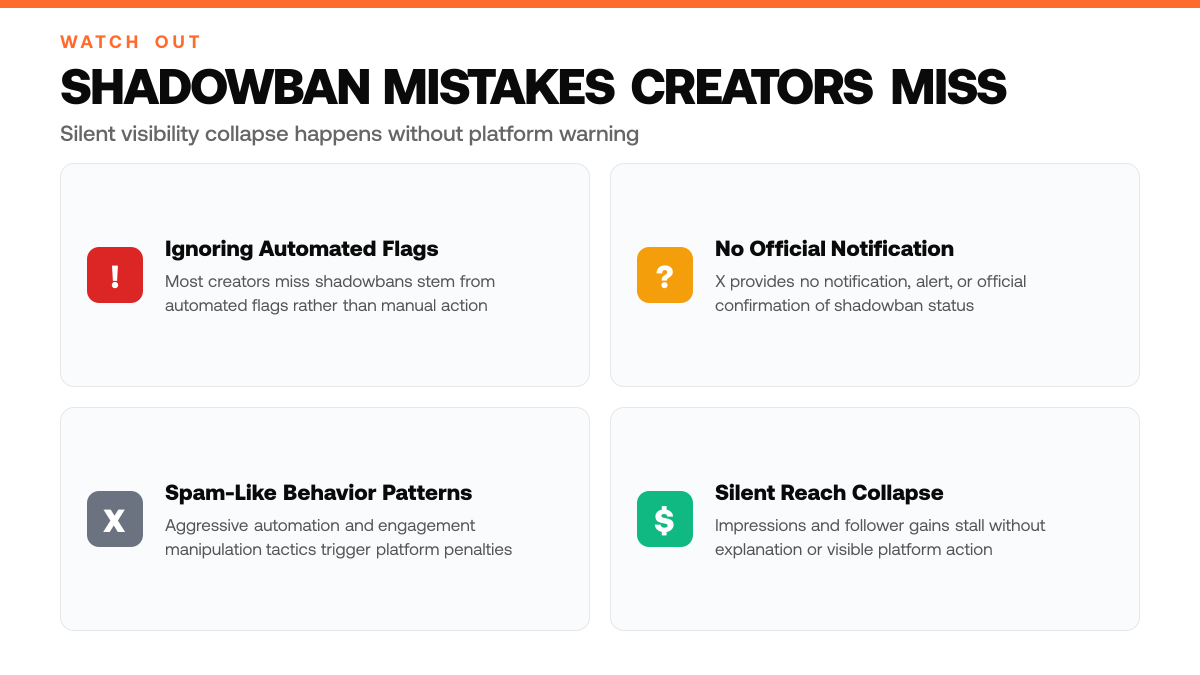
- Most creators miss that shadowbans often stem from automated flags rather than manual action, fixing the root cause is faster than waiting for manual review.[2]
Understanding Twitter Account Shadowban
What Is a Twitter Shadowban?
A Twitter shadowban is a silent restriction placed on your account that limits the visibility of your posts without notifying you. Unlike a full account suspension, which is obvious and explicit, a shadowban operates invisibly, your tweets may be excluded from search results, hashtag feeds, or recommendations, while your account remains active and appears normal to you. The platform applies shadowbans to protect user experience and maintain integrity by detecting and penalizing specific behaviors: spam-like patterns, aggressive automation, policy violations, or engagement manipulation tactics that violate X's terms of service.[3]
Why Shadowbans Matter for Creators
For solo creators and solopreneurs building an audience on X, a shadowban can devastate growth efforts without warning. Your follower count may stall, impressions may plummet, and engagement may drop sharply, all while you wonder why your content strategy suddenly stopped working. Because the restriction is silent, you must actively test and diagnose your account to confirm a shadowban exists. This diagnostic burden falls entirely on you; X provides no notification, alert, or official confirmation. Understanding what triggers shadowbans helps you avoid the behaviors that activate them and protects the visibility you've worked to build.[3]
Shadowban Detection and Recovery
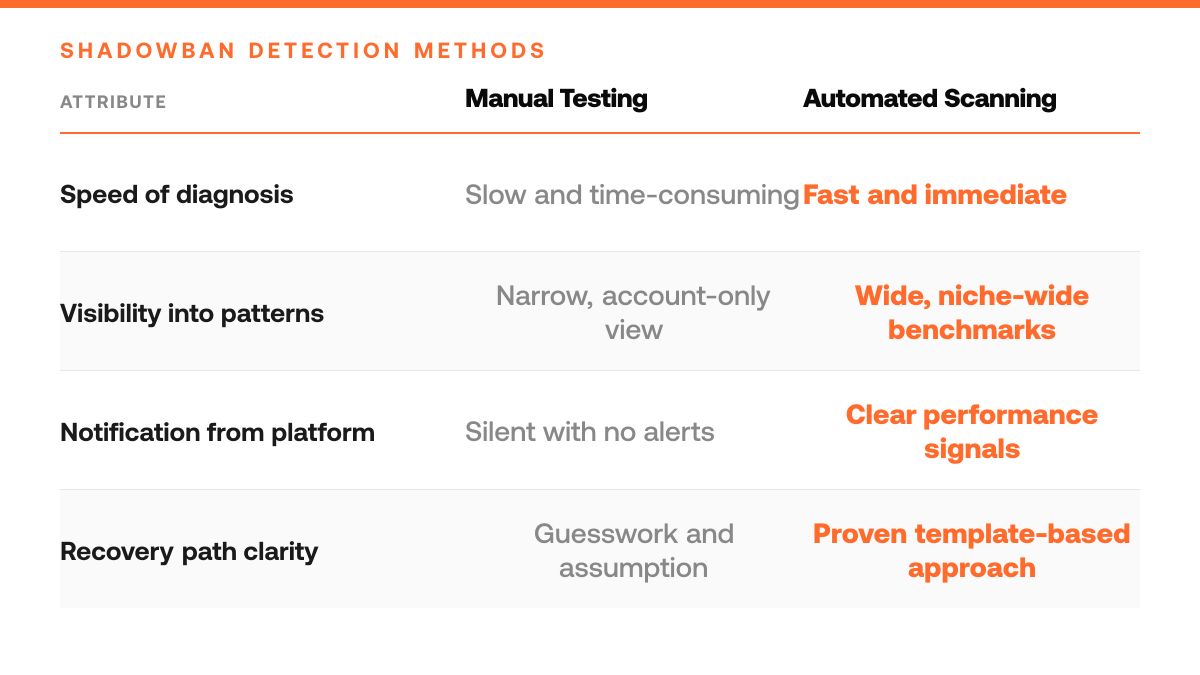
Detecting a shadowban requires deliberate testing since X's algorithm operates behind the scenes. Creators often notice sudden drops in reach, reduced replies to new tweets, or posts that fail to appear in hashtag searches, signs that your content is being suppressed. Recovery depends on identifying and stopping the behavior that triggered the restriction. Once you cease the problematic activity, the shadowban typically lifts within a period of time, though X does not publish exact timelines. The key is recognizing early warning signs and adjusting your posting and engagement habits before a full shadowban takes effect.[3]
Step-by-Step Process
1. Test your shadowban status using verification tools
Use third-party shadowban checkers or conduct manual search tests to confirm whether the penalty is active. Search your username or recent posts from an incognito browser or logged-out account to see if your content appears in search results or in followers' feeds. This diagnostic step clarifies whether a shadowban is actually limiting your reach or if another factor is at play.[4]
2. Audit your recent activity for policy violations
Review your posting history, engagement patterns, and content for behaviors that commonly trigger shadowbans: excessive automation, rapid-fire posting, hashtag spam, repetitive replies, or violations of X's terms of service. Document which actions occurred in the days or weeks before your reach dropped. This audit reveals the specific trigger so you can address it directly.[4]
3. Pause problematic behavior and reset your posting rhythm
Stop the triggering activity immediately, disable automation tools, reduce posting frequency to a natural cadence, remove or edit violating content, and clean up spammy hashtags or repetitive engagement. Allow your account a brief reset period before resuming activity. This pause signals to X's systems that the violation was temporary and unintentional.[4]
4. Rebuild trust through consistent, authentic engagement
Over the following weeks, post high-quality, original content on a regular but moderate schedule. Engage genuinely with other creators' posts, respond thoughtfully to replies, and avoid any behavior that resembles automation or spam. Consistent, authentic activity demonstrates account health and helps X's algorithm restore your visibility organically.[4]
How This Works in Practice
Example 1: The Creator Caught in Aggressive Hashtag Automation
Picture a creator who's been posting daily content with the same 30 hashtags on every single post, using an automation tool to attach them instantly. After a few weeks, she notices her impressions have dropped sharply, posts that used to reach thousands now struggle to break a few hundred. She's hitting a shadowban, likely triggered by the repetitive hashtag pattern that looks like spam to X's algorithm. She pauses the automation tool, removes the hashtag automation from her workflow, and starts posting hashtags manually and varying them by topic. Within days, her reach begins to recover. Posts start appearing in search results again, and her follower notifications pick up. The key shift: she moved from automated, identical tagging to natural, contextual hashtag use that signals authentic engagement rather than bot-like behavior.[5]
Shadowban Triggers: Do's and Don'ts
| Behavior Pattern | Safe Practice | Shadowban Risk |
|---|---|---|
| Engagement Tactics | Reply thoughtfully to relevant conversations | Aggressive automation or manipulation tactics |
| Posting Frequency | Share consistent, original content regularly | Spam-like patterns or excessive posting |
| Account Activity | Build genuine audience through quality posts | Policy violations or suspicious automation |
| Hashtag Use | Include relevant hashtags in authentic posts | Hashtag stuffing or search manipulation |
Example 2: The Solopreneur Caught in Promotional Spam Filters
Consider a solopreneur who's been posting the same promotional message about her course 5 times a day across different hours, hoping to catch different time zones and maximize visibility. Within a week, her tweets stop showing up in followers' feeds and searches, she's been flagged by X's spam detection. She realizes the identical messaging and high frequency read as spam automation to the platform. She cuts back to posting once daily, and more importantly, she varies her message each time, different angles, different hooks, different calls-to-action around the same offer. She also spaces out promotional posts with genuine engagement, replies to others, and shares non-promotional insights. Within a week, her posts reappear in feeds and searches. Visibility recovers because her posting pattern now looks human and intentional rather than repetitive and mechanical.[5]
Why Authenticity Lifts the Penalty
Both examples share a common thread: shadowbans are triggered by patterns that mimic automation and spam, and they lift when you shift back to natural, varied behavior. The recovery isn't instant, it takes a few days to a week, but it's consistent. The lesson for solo creators is clear: the platform rewards genuine, human-paced engagement over aggressive, repetitive tactics. Pausing the bot-like behavior and returning to intentional, authentic posting is the fastest path out.[5]
Twitter Shadowban Recovery Checklist
- Review your recent posts for violations of Twitter's automation, spam, or engagement-farming rules that may have triggered shadowban filters.
- Check your account settings and remove any third-party app integrations or bot tools that could be flagged as inauthentic activity.
- Audit your follower growth and engagement patterns for sudden spikes or suspicious activity that mimics bot behavior.
- Test your visibility by searching your own username and recent tweets from an incognito browser to confirm whether your content appears in search results.
- Pause aggressive posting, hashtag use, and reply tactics for several days while maintaining authentic, manual engagement with your audience.
Common Mistakes to Avoid
Mistake: Assuming shadowban is permanent or caused by your content topic
Creators often believe a shadowban is irreversible or tied to what they post about, when it's actually a behavioral penalty, like excessive posting, engagement pods, or automation, that can be reversed. This misconception leads them to abandon their account or pivot topics unnecessarily, wasting months of growth. Instead, audit your posting patterns and engagement habits against Twitter's automation rules, then adjust behavior deliberately to signal recovery.[6]
Shadowban vs Full Suspension: Key Differences
| Aspect | Shadowban | Full Suspension |
|---|---|---|
| Visibility to You | Account appears normal, posts silently suppressed | Account flagged and explicitly restricted |
| Notification Status | No warning or alert from platform | Clear notification of violation |
| Recovery Path | Stop problematic behavior, rebuild trust gradually | Manual review required for reinstatement |
| Impact on Reach | Impressions plummet, followers stall silently | Complete loss of posting ability |
Mistake: Continuing the triggering behavior while waiting for recovery
Many creators keep the same posting frequency, bot interactions, or automation tactics while hoping the shadowban lifts on its own. This extends the penalty duration significantly. Stop the behavior immediately, reduce posting frequency, disable third-party automation, and avoid engagement pods. Twitter's algorithm needs to see a clear shift in your account activity to recognize the penalty should be lifted.[6]
Mistake: Ignoring the shadowban and hoping it resolves without action
Waiting passively for a shadowban to disappear wastes weeks or longer in lost reach, impressions, and follower growth. Early detection and swift behavioral correction are critical. Monitor your reach metrics weekly, check if your tweets appear in search results, and act immediately if you notice drops. Proactive adjustment cuts recovery time and prevents compounding losses to your growth trajectory.[6]
Frequently Asked Questions
How long does it take to recover from a Twitter shadowban?
Recovery typically unfolds within weeks once you stop the triggering behavior and follow the checklist steps outlined in this guide. The timeline depends on what caused the shadowban, aggressive automation, repetitive posting, or engagement pods resolve faster than account-level violations. Twitter's algorithm reassesses your account regularly, so consistent compliance with platform rules accelerates the process. Monitor your impressions and reply counts weekly to confirm visibility is returning.
Can a Twitter shadowban be permanent?
A shadowban itself is not permanent, it's a temporary suppression of your content's reach. However, if you repeat the same violations after recovery, Twitter may reinstate the shadowban or escalate to a full account suspension. The key is understanding what triggered it and adjusting your posting behavior. Creators who address the root cause (bot-like activity, spam patterns, or platform manipulation) and maintain authentic engagement rarely face repeat shadowbans.
What's the best way to prevent a shadowban from happening again?
Maintain a consistent, authentic posting rhythm without relying on automation or engagement pods. Avoid hashtag stuffing, repetitive replies, and sudden spikes in activity that mimic bot behavior. Post original, high-value content that encourages genuine replies and retweets rather than hollow metrics. Track which content formats and topics resonate with your audience so you can double down on what works without resorting to manipulation tactics.
Sources
Try the loop on your own cohort.
Pick three accounts you would like to be at in 12 months. ClimbX pulls their recent outliers, tags them, and drafts in your voice off what is currently working. Edit, ship, watch the loop tighten.
Read next
- Do AI images hurt your reach on X? I tested it on my last 100 posts. - I ran a small experiment: more images on my posts, many of them AI art. The data from 100 posts: AI illustrations and other decorative images cut reach by 48% on generic posts and 65% on one-liners - while real proof images (payout screenshots, charts, records) gained 78%. The full numbers, the clean split, and the ClimbX feature this experiment killed.
- How to get X (Twitter) data into your AI agent through MCP. - Your agent can read your real X analytics, voice profile, and outlier feeds through one MCP server - no scraping, no X API contract, one command to connect Claude Code, Claude Desktop, or Cursor. The full setup, the 16 tools, what an agent can actually do with them, and how a customer shipped the first MCP server on our API before we did.