Thousands of solo creators on X wake up each day to an audience they've built, but no clear path to turn that following into reliable income. They post consistently, watch their follower count climb, and yet struggle to convert attention into revenue. The monetization options exist, sponsorships, digital products, memberships, affiliate links, but knowing which strategy actually works for your specific niche and follower size remains a guessing game.
The creator economy has expanded dramatically, opening genuine income opportunities for solo creators who can match the right monetization method to their audience size and content type. Yet most creators lack clarity on which approaches deliver results at their stage. Without this clarity, they either abandon monetization entirely or waste weeks testing strategies that were never suited to their follower count in the first place.[1] For a deeper look, see 5 X Niches That Monetize Fast in 2026. For a deeper look, see How to Monetize a Small X Following.
This article maps the monetization strategies that work for solo creators at different stages, explains how to choose the right mix for your niche, and walks through the practical steps to launch each one. You'll learn which approaches require minimal audience size, which ones scale as you grow, and how to avoid the common mistakes that leave creators spinning their wheels. Most solo creators guess at what hooks their audience instead of learning from the outliers already winning in their niche, ClimbX scans high-performing accounts ahead of you to surface posts doing 2-3x their baseline engagement, then uses those signals to draft new posts in your voice so growth compounds over time.
TL;DR
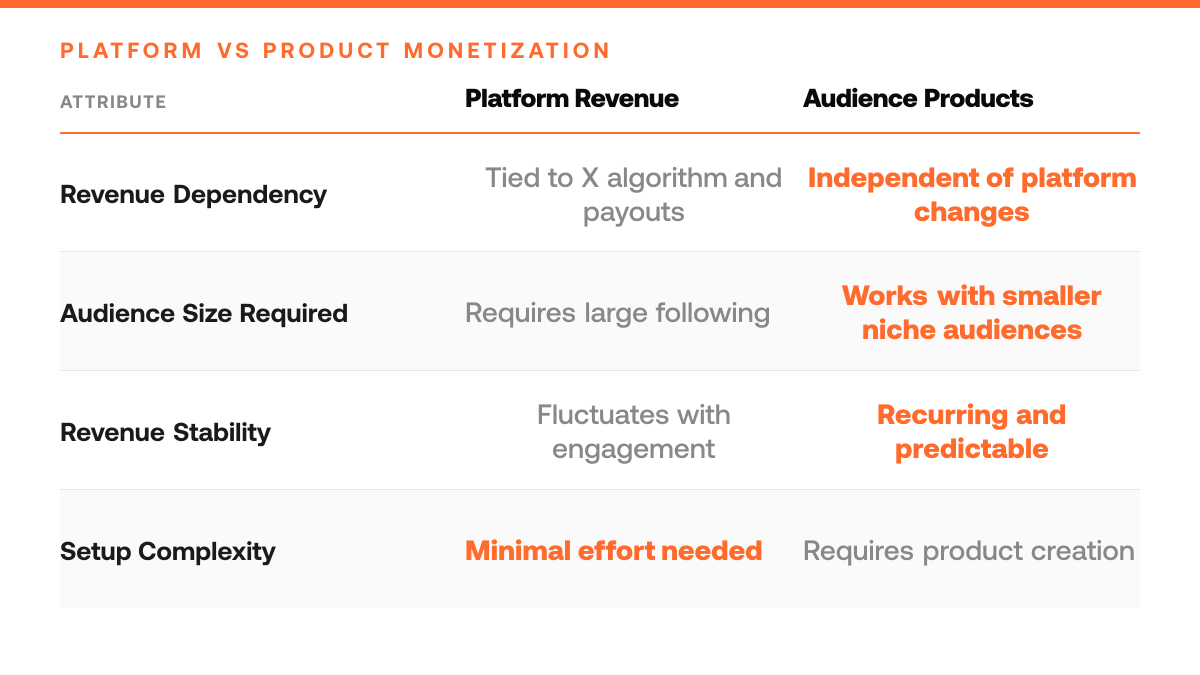
- Solo creators can earn through X platform programs like revenue sharing and creator funds, which reward audience engagement directly on the platform.
- Direct monetization, sponsorships, affiliate links, and brand partnerships, lets you leverage your followers without relying solely on platform payouts.
- Building audience products like courses, communities, and newsletters creates recurring revenue streams independent of X's algorithm and payout structures.[6]
Understanding Twitter Monetization Strategies for Solo Creators
What Are Twitter Monetization Strategies?
Twitter monetization strategies are the methods solo creators use to generate revenue from their audience and content on the platform. These approaches range from direct audience payments through subscriptions and tips, to brand partnerships, affiliate marketing, and selling digital products or services. Each strategy operates differently, some reward consistent posting and high engagement, while others depend on niche authority or a specific follower threshold. There is no single path that works for every creator; the right approach depends on your audience size, engagement patterns, content niche, and how long you've been building your presence.[4]
Why Monetization Strategy Matters for Your Growth
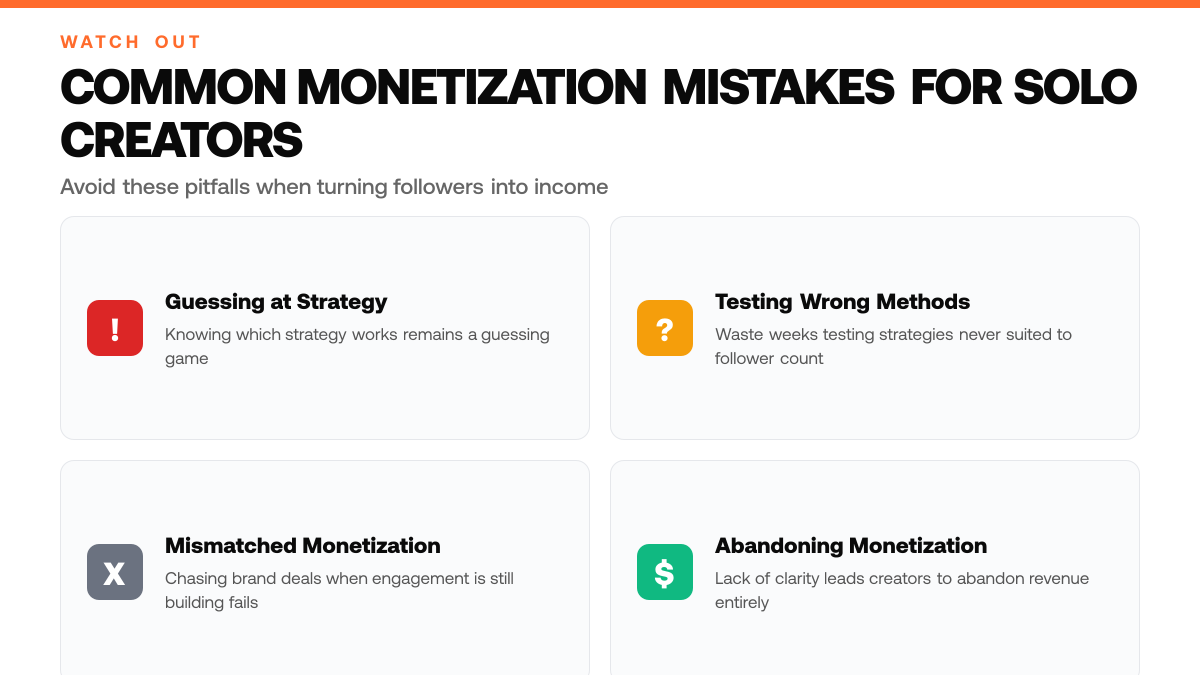
Choosing the right monetization strategy early shapes how you build content and grow your following. Some strategies become available only after you've hit certain milestones in follower count or engagement consistency, while others can start generating revenue at smaller audience sizes if your niche is specific enough. Understanding which strategies align with your current position prevents wasted effort and helps you focus on the content and consistency that unlock the monetization path you're pursuing. Mismatched strategies, like chasing brand deals when your engagement is still building, lead to frustration and slower revenue growth.[4]
How Audience Size and Engagement Shape Your Options
The relationship between follower count, engagement rate, and niche positioning determines which monetization strategies become viable first. A creator with a small but highly engaged audience in a specialized niche may monetize faster through direct services or affiliate recommendations than a creator with a larger but loosely engaged following. Conversely, creators building broad audiences often unlock sponsorships and platform revenue programs once they hit certain scale thresholds. Content consistency directly influences both follower growth and engagement rates, which in turn unlock new monetization opportunities. The key is aligning your content strategy with the monetization approach that fits your current audience reality, not forcing a strategy that requires a different audience profile.[4]
Key Numbers for Monetizing Twitter Followers as a Solo Creator (2025)
- Creator economy projected to reach $104.2 billion globally by 2025, reflecting sustained growth in audience monetization opportunities.[5]
- 5,000 Twitter followers required to access Twitter's monetization program, unlocking ad revenue and subscription features.
- 10,000 impressions per month threshold for brand sponsorship eligibility on creator platforms, a key engagement metric.
- 72% of creators report diversifying income streams across multiple platforms, indicating multi-channel monetization as industry standard.[5]
- Audience authenticity and engagement rate matter more than follower count alone; brands prioritize interaction metrics over vanity numbers.
- Content consistency and niche focus drive 3x higher monetization rates compared to generalist accounts, per creator economy research.[5]
Step-by-Step Process
1. Audit Your Current Audience Size and Engagement
Before selecting a monetization channel, establish a baseline of your follower count and engagement metrics. Review your last several weeks of posts to calculate your average engagement rate, likes, replies, and retweets per post. This data determines which monetization strategies are even available to you; some platforms require minimum follower thresholds or engagement benchmarks before you qualify. Document these numbers in a simple spreadsheet so you can track growth over time and know when you become eligible for new revenue streams.[2]
2. Map Monetization Channels by Feasibility Order
Not all monetization methods are equally accessible right now. List the channels available to you, ad networks, sponsorships, affiliate marketing, digital products, or membership programs, and rank them by what you can launch immediately versus what requires prerequisites. For example, some ad networks have minimum follower counts, while sponsorships depend on your niche authority and engagement rate. Identify which channels align with your current audience size and which ones you'll unlock as you grow, so you avoid wasting effort on strategies that aren't yet viable for your account.[2]
3. Implement Your First Revenue Stream in Parallel with Growth
Start with the monetization method that requires the fewest prerequisites, often ad networks or affiliate links if your follower count qualifies. Begin this immediately while you continue building your audience. The goal is to generate early revenue without waiting until you hit larger milestones. This keeps motivation high and proves the concept works before you invest effort in more complex strategies like sponsorships or premium memberships that demand higher engagement or follower thresholds.[2]
How This Works in Practice
Example 1: The Niche Expert Building Sponsorship Revenue
Picture a solo creator focused on indie game development who has grown a modest but engaged following over 18 months. They post technical breakdowns and behind-the-scenes insights 3 - 4 times weekly, attracting developers and hobbyists genuinely interested in their niche. Rather than chasing viral moments, they lean into depth: detailed threads on game engines, honest retrospectives on failed projects, and early access previews. Within a few months, game development tool companies and indie publishers begin reaching out directly with sponsorship offers. Their audience size remains in the thousands, but the specificity of their followers, people actively buying dev software and funding indie games, makes each partnership valuable. They negotiate sponsorships that align with their content, monetizing not through sheer follower count but through audience relevance and demonstrated expertise.[3]
Monetization Strategies by Audience Stage
| Strategy Type | Best For Small Audiences | Best For Growing Audiences | Best For Large Audiences |
|---|---|---|---|
| Platform Revenue Sharing | Limited payouts early | Consistent engagement rewards | Highest direct platform income |
| Direct Monetization (Sponsorships, Affiliate) | Niche authority matters more than size | Brands begin approaching | Primary revenue source |
| Audience Products (Courses, Communities) | Highly engaged niche followers | Recurring revenue builds | Scales with existing reach |
Example 2: The Generalist Creator Scaling Multiple Revenue Streams
Consider a solopreneur sharing productivity and business insights who has built a larger, broader following over time. They post daily observations on workflows, hiring decisions, and scaling challenges, content that resonates across multiple industries. As their audience grows, they unlock several revenue channels simultaneously: affiliate links embedded in threads about tools they genuinely use, a paid newsletter tier for deeper analysis, and speaking opportunities at industry conferences. They also notice that certain content pillars (hiring and team dynamics) generate the most engagement and inbound inquiry, so they double down on those topics. Their income comes from a mix of sources rather than a single sponsorship, and the diversity means they're less vulnerable if one stream fluctuates. Their larger audience size opens doors to higher-tier partnerships, but the key is that they've identified which niches within their following are most valuable.[3]
Audience Fit Drives Revenue, Not Just Size
Both creators monetize successfully, but through different levers. The niche expert commands premium sponsorship rates despite a smaller follower count because their audience's buying intent is clear. The generalist scales multiple streams by identifying which segments of their broader following are most engaged and valuable. The common thread: real monetization flows from understanding your audience's needs and interests, not simply accumulating followers. When you know who you're speaking to and why they're listening, the revenue opportunities follow naturally.[3]
Pre-Launch Monetization Checklist
- Audit your current follower count and engagement metrics across your recent posts to establish a baseline before pursuing monetization.
- Review Twitter's monetization eligibility requirements and confirm your account meets the follower threshold and activity standards.
- Analyze your top-performing content themes to identify which topics drive the most impressions and audience interaction.
- Document your content calendar and posting frequency to ensure consistency meets platform expectations for monetized creators.
Common Mistakes to Avoid
Mistake: Launching monetization before building genuine audience engagement
Solo creators often rush to monetization, sponsorships, affiliate links, paid newsletters, before they have an audience that actually trusts and engages with their content. This backfires because early followers are fragile; they unfollow when they see a sudden shift to selling. Instead, spend the first months building consistent, valuable content that attracts engaged followers. Monetization works only when your audience is already invested in what you share, not the other way around.[5]
Do vs. Don't: Matching Strategy to Your Position
| Situation | Do This | Don't Do This |
|---|---|---|
| Small but highly engaged niche audience | Pursue direct services and affiliate recommendations | Chase brand deals requiring broad reach |
| Building broad audience with moderate engagement | Focus on platform revenue sharing and consistency | Expect sponsorship income before engagement stabilizes |
| Unclear which strategy fits your niche | Study high-performing accounts in your niche first | Guess at monetization methods and waste weeks testing |
| Early stage with unclear follower trajectory | Choose strategy aligned with current position | Pursue strategies requiring milestones you haven't hit |
Mistake: Chasing follower count and impressions instead of engagement metrics
A common trap is obsessing over vanity metrics, total followers and impressions, while ignoring replies, retweets, and click-through rates. High follower counts with low engagement signal a hollow audience that won't convert to customers or supporters. Focus instead on reply rates and shares; these show real interest. Track which tweets drive actual behavior (clicks, sign-ups, sales), not just visibility. An engaged audience of hundreds beats a silent audience of thousands.[5]
Mistake: Neglecting posting consistency and rhythm
Solo creators often post sporadically, bursts of activity followed by silence, which trains followers to ignore notifications. Algorithm feeds reward consistency, and audiences lose momentum when you disappear. Establish a realistic posting schedule (daily, three times weekly, whatever you can sustain) and stick to it for weeks before evaluating results. Consistency compounds; irregular posting kills growth before monetization ever enters the picture.[5]
Frequently Asked Questions
What's the minimum follower count before I can start earning on Twitter?
Twitter's monetization eligibility varies by program. For Twitter Ads revenue sharing, you typically need an established audience with consistent engagement; there's no single hard floor, but smaller accounts often see minimal earnings until they reach several thousand followers. The key is demonstrating regular, quality interactions rather than hitting a specific number. Focus on audience growth and engagement rate first, earnings follow once your content consistently attracts attention.
How long does it usually take to earn your first payment from Twitter monetization?
Timeline depends on your chosen monetization channel. Some programs like Spaces or newsletter sponsorships can generate income within weeks if you have an engaged audience; others require several months of consistent posting and follower growth before you meet eligibility thresholds. The most reliable path is building a loyal, engaged audience first, earnings come faster when your content already attracts regular interaction and shares.
Should I focus on Twitter monetization or pursue sponsorships and affiliate links instead?
Each channel has different strengths. Twitter's native monetization (Ads revenue share, Spaces) works best if you already have meaningful reach; sponsorships and affiliate links reward niche authority and audience trust, even at smaller scales. Many successful creators layer all three, native monetization provides baseline income while sponsorships and affiliate promotions leverage your credibility for higher per-post earnings. Test which mix resonates with your audience and aligns with your content.
Start your 7-day trial
Grow on X without sounding like everyone else. The right tool learns from your top posts and the leading voices in your niche, then drafts content in your voice. You edit, approve, and ship.
Start free trialSources
Read next
- Why You Need a Personal Brand in 2026 - A practical look at why personal branding matters in 2026, how it builds trust and distribution, and what founders and professionals should do first.
- How to Use AI for Personal Branding Without Sounding Like AI - Use AI to research, organize, and draft personal-brand content without losing your voice, judgment, or credibility.