You're scrolling through your profile and notice a tweet from another creator in your niche that resonates with your audience. Instead of just retweeting it, you can pin it directly to your profile, a feature that lets you feature high-performing content from other accounts right alongside your own work. This simple tactic is often overlooked by solo creators building an audience, yet it's a legitimate way to amplify reach and signal alignment with valuable voices in your niche.[1]
For solopreneurs managing limited time and resources, curating and pinning quality content from others can be as strategic as creating your own posts. It demonstrates that you're plugged into your community, respect peer voices, and have taste in what matters. This approach works especially well when you're trying to grow followers and increase impressions without spending all your energy guessing what content will actually land.
This guide walks you through the mechanics of pinning someone else's tweet, explains when and why to use this tactic, and shows you how to make it part of a broader strategy for building authority and audience on X.
TL;DR
- Retweet someone else's tweet first, then access the retweet menu to find the 'Pin to your profile' option
- Pinning others' tweets lets you curate your profile with high-performing or relevant content without creating original posts
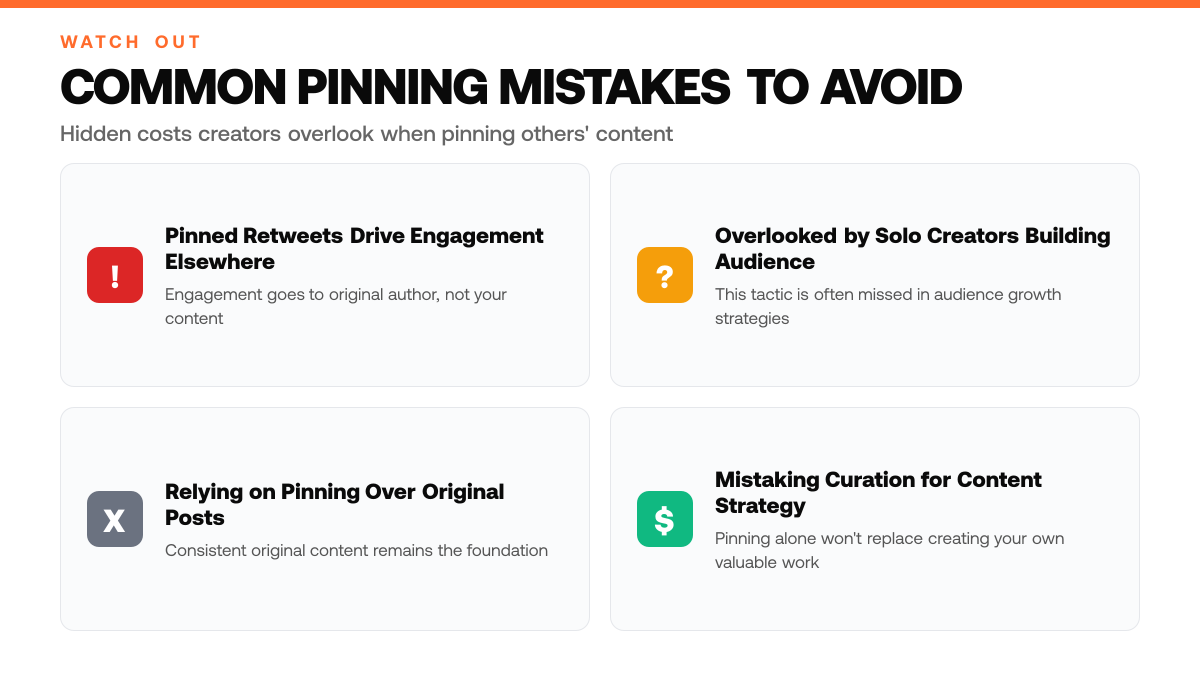
- Most creators miss that pinned retweets still drive engagement to the original author, not your own content, use strategically[2]
Understanding How to Pin Someone Else's Tweet on Twitter
What Does Pinning Someone Else's Tweet Mean?
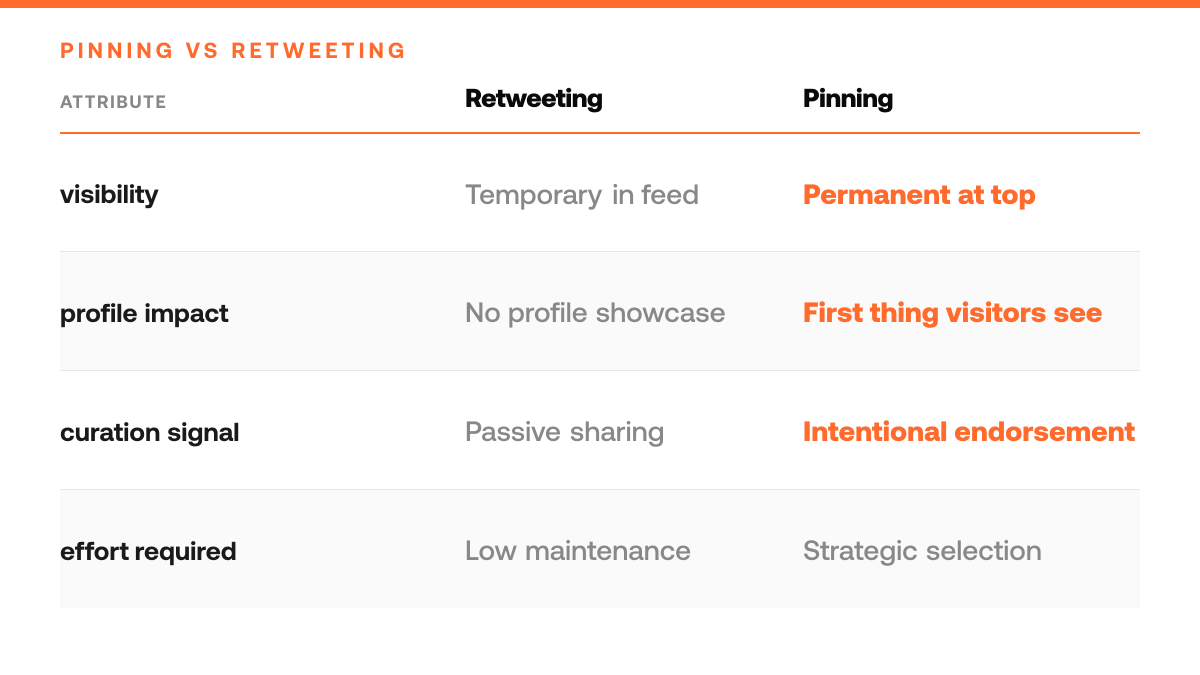
Pinning someone else's tweet is a curation strategy that anchors another creator's content permanently to the top of your profile header without requiring you to retweet it repeatedly. When you pin a tweet, it stays locked in place above your other posts, making it the first thing visitors see when they land on your profile. This differs fundamentally from retweeting, which shares the content in your feed and relies on ongoing visibility through the timeline. Pinning creates a static, deliberate showcase of content you want to highlight, whether that's a collaborator's work, industry insight, or a piece that resonates with your audience.[3]
Why Pinning Matters for Creators Building Community
For solo creators and solopreneurs, pinning someone else's tweet signals curation skills and positions you as a thoughtful connector within your creator community. When your profile visitors see pinned content from other creators, it demonstrates that you actively engage with and amplify voices you respect, a quality that builds trust and encourages reciprocal engagement. This tactic works because it shows intentionality; you're not just consuming content, you're curating it. Audiences respond to creators who lift others up, and pinning creates a visible, permanent endorsement that can strengthen relationships, spark collaborations, and expand your reach through association with quality voices in your niche.
How Pinning Fits Into a Broader X Growth Strategy
Pinning is one lever in a larger audience-building toolkit for creators focused on growing followers and increasing impressions. While consistent original content remains the foundation, strategic pinning extends your profile's narrative beyond your own voice. It communicates your values, influences, and community priorities at a glance. When combined with thoughtful engagement, original posts, and authentic interactions, pinning amplifies your positioning as someone who understands the creator landscape and invests in collective growth. For solopreneurs aiming to monetize influence, this credibility and connector status often translates into partnership opportunities, sponsorships, and deeper audience loyalty.
Step-by-Step Process
1. Find the tweet you want to pin
Navigate to the tweet on your X feed or search for it using keywords, the author's handle, or a direct link. Open the tweet in full view so you can access all interaction options. Make sure you can see the complete tweet content and engagement metrics before proceeding to the next step.
2. Retweet the tweet to your profile
Click the retweet icon (the two-arrow symbol) beneath the tweet. Choose the standard retweet option from the menu that appears. This action shares the tweet to your followers and adds it to your profile's retweet collection, making it available for pinning.
3. Access the retweet menu from your profile
Go to your profile page and locate the tweet you just retweeted in your timeline. Hover over or tap the retweet to reveal additional options. Look for the three-dot menu icon that appears on the tweet card.[4]
4. Select the pin option to lock it to your profile
Click the three-dot menu and select the pin option from the dropdown menu. This action locks the retweeted tweet to the top of your profile, where it will remain visible to anyone visiting your page. The pinned tweet stays in place until you manually unpin it.[4]
How This Works in Practice
Example 1: The SaaS Founder's Positioning Play
Picture a solopreneur building a B2B SaaS tool for remote teams. She's noticed a respected industry analyst publishing sharp takes on workplace collaboration trends, observations that align perfectly with her product's core value. Rather than retweeting with a generic comment, she pins one of those tweets to her profile. Now, when prospective customers land on her account, they immediately see her positioned alongside established thought leaders in her space. The pinned tweet signals credibility and shared values without her having to write a lengthy thread. Over the following weeks, she notices new profile visitors asking about her product, and several mention they saw her profile and felt confident in her expertise before even clicking her website.
Pinning vs. Retweeting: When to Use Each
| Tactic | Best For | Visibility | Audience Signal |
|---|---|---|---|
| Retweeting | Sharing content in your feed and timeline | Ongoing visibility through feed | Shows you engage with relevant voices |
| Pinning | Permanent profile showcase and curation | Static placement at top of profile | Demonstrates intentional endorsement and community values |
| Combined approach | Building authority and amplifying reach | Both feed presence and profile anchor | Positions you as thoughtful connector in niche |
Example 2: The Content Creator's Engagement Blueprint
Consider a content creator focused on personal finance education who's been experimenting with different tweet styles. One peer's thread on budgeting psychology performed exceptionally well, thousands of replies, strong engagement, and comments from the exact audience the creator wants to attract. She pins that tweet to her profile, not as an endorsement of the peer's work, but as a signal of the conversation quality and audience she's building toward. When new followers land on her profile, they see a pinned example of the thoughtful, high-engagement discussions happening in her corner of X. This visual cue helps her attract followers who are genuinely interested in substantive financial content, rather than casual browsers. Within weeks, her own engagement metrics improve as her audience becomes more aligned with her content style.
Why Pinning Signals Intention
In both cases, pinning someone else's tweet becomes a strategic choice, a way to communicate positioning and audience standards without claiming credit. For solopreneurs and creators building influence on X, a pinned tweet is real estate on your most-viewed profile section. It tells visitors what you stand for and what kind of conversation you're hosting, making it easier to attract the right followers and establish credibility in a crowded space.
Pinning Someone Else's Tweet Checklist
- Read the tweet in full and verify its message aligns with your brand voice and audience expectations before pinning
- Check the original creator's recent posts to confirm the content is evergreen and won't become outdated or controversial
- Review the tweet's engagement metrics to ensure it resonates with your audience and drives meaningful interactions
- Confirm you have permission or that the creator allows retweets and pins of their content
- Unpin the tweet after a set period and replace it with fresh content to keep your profile current
Common Mistakes to Avoid
Mistake: Pinning low-engagement tweets that don't resonate with your audience
When you pin a tweet with minimal likes, replies, or shares, your profile's real estate gets wasted on content that doesn't reflect your best work. This dilutes the first impression new visitors get and signals weak audience connection. Instead, analyze your tweet performance before pinning, choose posts that generated genuine engagement and align with your core message to maximize profile impact.[5]
Do's and Don'ts for Pinning Others' Content
| Practice | Do | Don't |
|---|---|---|
| Content selection | Pin high-performing or niche-relevant tweets from respected creators | Pin random or low-quality content just to fill your profile |
| Strategic intent | Use pinning to signal alignment with valuable voices and demonstrate curation skills | Assume pinned retweets drive engagement back to your own content |
| Community building | Pin collaborators' work and industry insights to strengthen relationships | Pin content without considering how it reflects your values and positioning |
Mistake: Keeping the same tweet pinned indefinitely without rotation
Leaving one pin static for months means missing chances to showcase new high-performers and keep your profile feeling current. Your audience sees stale content, and emerging strong tweets never get the visibility boost a pin provides. Rotate your pinned tweet every few weeks or when a new post outperforms your previous pin, this keeps your profile fresh and ensures your best recent content gets top placement.[5]
Mistake: Pinning niche or off-brand tweets just because they performed well once
A single viral tweet outside your core topic can confuse your audience about who you are and what you stand for. When visitors land on your profile and see a pin that doesn't match your main message, they're less likely to follow. Pin only tweets that reinforce your brand identity and appeal to your target audience, performance matters, but relevance to your niche matters more.
Frequently Asked Questions
Why should I pin someone else's tweet instead of my own?
Pinning another creator's tweet signals authority, builds community goodwill, and positions you as a curator of valuable content in your niche. It works best when the pinned tweet aligns with your audience's interests and reinforces your own content strategy. The key is choosing content that resonates with your followers and drives meaningful engagement, not just any popular post.
How do I know which tweets are worth pinning?
Look for tweets that align with your audience's needs and your growth goals. Strong candidates show consistent engagement patterns, spark conversation, and complement your existing content. The right tool helps creators identify which tweets from their network are worth pinning by analyzing engagement patterns and audience alignment, removing the guesswork from content curation decisions.
Will pinning someone else's tweet hurt my engagement?
No, pinning curated content can actually strengthen engagement when it feels authentic to your brand. Your audience expects variety and perspective, not just self-promotion. The risk comes from pinning irrelevant or low-quality content. Stick to posts that genuinely serve your followers and align with your voice.
Sources
Try the loop on your own cohort.
Pick three accounts you would like to be at in 12 months. ClimbX pulls their recent outliers, tags them, and drafts in your voice off what is currently working. Edit, ship, watch the loop tighten.
Read next
- Why You Need a Personal Brand in 2026 - A practical look at why personal branding matters in 2026, how it builds trust and distribution, and what founders and professionals should do first.
- How to Use AI for Personal Branding Without Sounding Like AI - Use AI to research, organize, and draft personal-brand content without losing your voice, judgment, or credibility.