A post lands on your timeline and gets a thousand views. Another sits dormant. The difference between these outcomes isn't luck, it's tied directly to impressions, the metric that determines how much money flows into your account when you're part of a creator monetization program on X. Understanding what impressions actually measure is the foundation of any sustainable earnings strategy.
Impressions represent the total number of times your content appears on someone's screen, whether they engage with it or not. This metric matters because X's creator payment systems tie payouts directly to impression volume. For solo creators building an audience without a team or existing platform, impressions are the primary lever you control to influence your income. The more visibility your posts receive, the more you earn.
This section breaks down what impressions mean on X, why they matter for your bottom line, and how understanding this metric shapes the content decisions you'll make moving forward. You'll see why chasing impressions isn't vanity, it's the core of monetization math on the platform.
TL;DR
- Impressions on X are the total number of times a tweet appears in users' feeds, regardless of whether they engage with it
- Higher impressions expand your reach and visibility, which directly influences monetization potential on the platform
- Tracking impressions helps you identify which content resonates with your audience and refine your strategy for growth[4]
Understanding Impressions on Twitter and Their Impact on Payouts
What Are Impressions on Twitter?
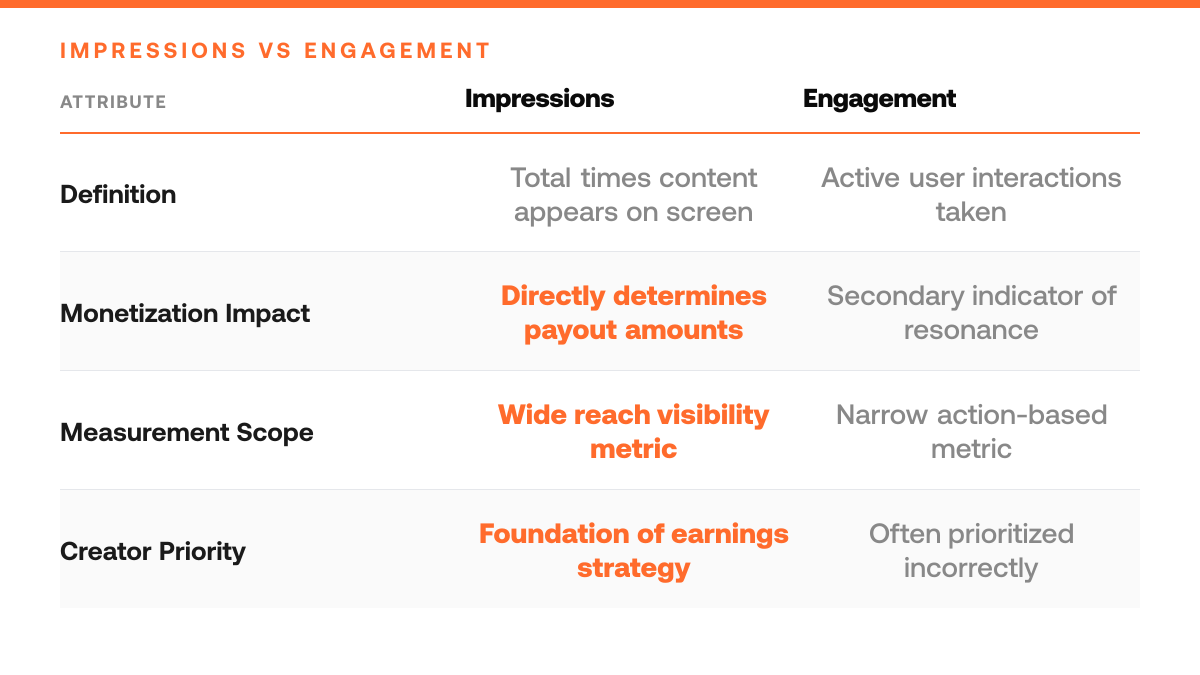
Impressions on Twitter (now X) represent the total number of times your tweet appears in someone's feed, timeline, or search results, regardless of whether they interact with it. Think of an impression as a view: when a user scrolls past your content, that counts as one impression, even if they don't like, retweet, reply, or click anything. This is fundamentally different from engagement metrics. Engagement measures active interaction, likes, retweets, replies, and clicks, which show that someone took a deliberate action. Impressions, by contrast, measure pure reach and visibility. A tweet can rack up thousands of impressions with minimal engagement, or generate high engagement from a smaller impression base. Understanding this distinction is critical because the two metrics tell very different stories about your content's performance.[3]
Why Impressions Matter for Creators and Monetization
For solo creators and solopreneurs building an audience on X, impression counts directly influence your eligibility for monetization features and revenue opportunities. Twitter's monetization programs, including ad revenue sharing and premium features, prioritize accounts that demonstrate consistent reach and content resonance. Higher impression counts signal that your content is reaching a broad audience, which increases your visibility to both followers and new potential followers. This expanded reach makes your account more attractive to brands for sponsorships and partnerships. Even if your engagement rate is modest, a steady stream of impressions proves that your content is being seen, shared across networks, and contributing to your overall influence on the platform. Creators who focus solely on engagement metrics while ignoring impressions often miss the bigger picture: reach is the foundation of monetization.[3]
Impressions as a Growth and Monetization Signal
In the broader creator economy, impressions serve as a leading indicator of content resonance and audience growth potential. Platforms reward accounts that accumulate impressions because high visibility attracts new followers, increases algorithmic distribution, and creates network effects. For solopreneurs, tracking impressions alongside engagement helps you identify which topics, formats, and posting times drive the most visibility. Over time, consistent impression growth demonstrates that your audience is expanding and your content is gaining traction, both prerequisites for sustainable monetization. Rather than chasing vanity metrics like follower count alone, savvy creators use impressions to validate that their content strategy is working and to forecast future earning potential.
Key Numbers for What Impressions Mean on Twitter (Impact on Payouts) (2026)
- $8 - $12 per 1 million verified-user impressions through X's Ads Revenue Sharing program[2]
- Payout rates vary by region: US traffic earns 3.5x the base rate, UK 2.8x, Canada 2.5x, India 0.8x[2]
- Eligibility requires at least 500 followers and 5 million post impressions in the last 3 months[5]
- Premium users receive roughly 10x the median reach of regular accounts[2]
- Healthy baseline engagement is 2 - 5% of your follower count per tweet[2]
Step-by-Step Process
1. Access X Analytics to review impression metrics
Log into your X account and navigate to your Analytics dashboard. Review your impression count for recent posts, this shows how many times your content appeared in users' feeds, regardless of engagement. Track which posts generated the highest impressions and note their content type, format, and posting time. This baseline data reveals patterns about what resonates with your audience.[1]
2. Identify high-performing content patterns
Compare your top-impression posts across several dimensions: topic, tone, media type (text, image, video), and length. Look for recurring themes in your best performers. For example, if educational threads consistently outperform casual commentary, or if posts with visuals drive more impressions than text-only content, document these patterns. This analysis reveals what your audience actively seeks from you.[1]
3. Optimize posting timing and audience targeting
Use your Analytics data to identify when your audience is most active. Post during peak engagement windows to maximize visibility. Refine your content strategy by targeting specific audience segments, focus on topics and formats that align with your followers' interests. Consistent posting at optimal times compounds impression volume over weeks, as your content reaches more users and gains algorithmic visibility.
4. Monitor impression growth to track monetization potential
Track your impression trends weekly or monthly. Higher impressions increase your visibility to brand partners, sponsors, and X's monetization programs, all of which tie payouts to audience reach. As impressions climb, your influence grows, opening doors to sponsorships, affiliate opportunities, and platform revenue sharing. Consistent optimization compounds this effect, turning impression growth into tangible income.
How This Works in Practice
Example 1: The Niche Strategist's Thread-Led Growth
Picture a solo creator focused on indie SaaS marketing who posts a mix of threads, quick replies, and occasional video clips. Early on, they notice that their 3-minute video breakdowns on pricing psychology generate far more impressions than their daily advice threads, sometimes double or triple the reach. Rather than abandon threads, they adjust: they begin anchoring their weekly strategy with a single high-effort thread (posted on Tuesday mornings) that threads together a complete case study, then follow up with 2 - 3 focused replies to trending posts in their niche within the same week. Over several weeks, they watch their impression count climb steadily. The thread-first approach attracts a concentrated audience segment, other founders and growth marketers, who engage repeatedly and share the content. Videos still outpace threads in raw impressions, but the combination of both creates a rhythm that keeps their profile visible to the right people, and followers accumulate from a genuinely engaged base rather than passive viewers.
Impressions vs Engagement: What They Reveal
| Metric | What It Measures | What It Signals |
|---|---|---|
| Impressions | Total times content appears on screens | Reach and visibility across your audience |
| Engagement | Active interactions like likes and retweets | Deliberate audience action and content resonance |
| High Impressions, Low Engagement | Broad visibility with minimal interaction | Content reaches many but doesn't compel action |
| Low Impressions, High Engagement | Small audience taking deliberate action | Strong connection with limited reach potential |
Example 2: The Vertical Expert's Reply-Focused Niche Play
Consider a solopreneur who teaches personal finance to Gen Z audiences and initially chases broad reach by posting general money tips. Impressions plateau because the content blends into thousands of similar posts. They pivot: instead of broadcasting, they begin spending 15 minutes daily replying thoughtfully to questions and discussions in finance communities and under posts from micro-influencers in their niche. Each reply is specific, addressing real confusion, offering a contrarian take, or sharing a personal lesson. These replies don't generate the highest impression counts individually, but they consistently reach the exact audience segment most likely to follow them: people actively thinking about money and seeking genuine guidance. Within a month, their follower growth accelerates noticeably, and the impressions that do come in convert to meaningful engagement and trust. The shift from volume to precision transforms their metrics.
Why Content Type Alignment Matters
Both examples reveal the same principle: impressions alone don't drive sustainable growth, the *type* of impression and the *audience segment* it reaches do. A niche creator who understands which content formats (threads, videos, replies) resonate with their specific audience can build momentum faster than someone chasing raw impression counts across all formats. The goal is to match your content strategy to your audience's behavior, then watch impressions and followers compound together.
Twitter Impressions Audit Checklist
- Pull your last week's impression count from X Analytics and compare it to the prior week to identify trending topics.
- Review which tweets drove the highest impressions and note the posting time, format, and topic for replication.
- Check your engagement rate (replies, retweets, likes) against impression volume to spot underperforming high-reach posts.
- Test one new content angle or format this week and measure its impression lift against your baseline.
- Document your top 5 impression-driving posts and extract the common elements to guide next week's content strategy.
Common Mistakes to Avoid
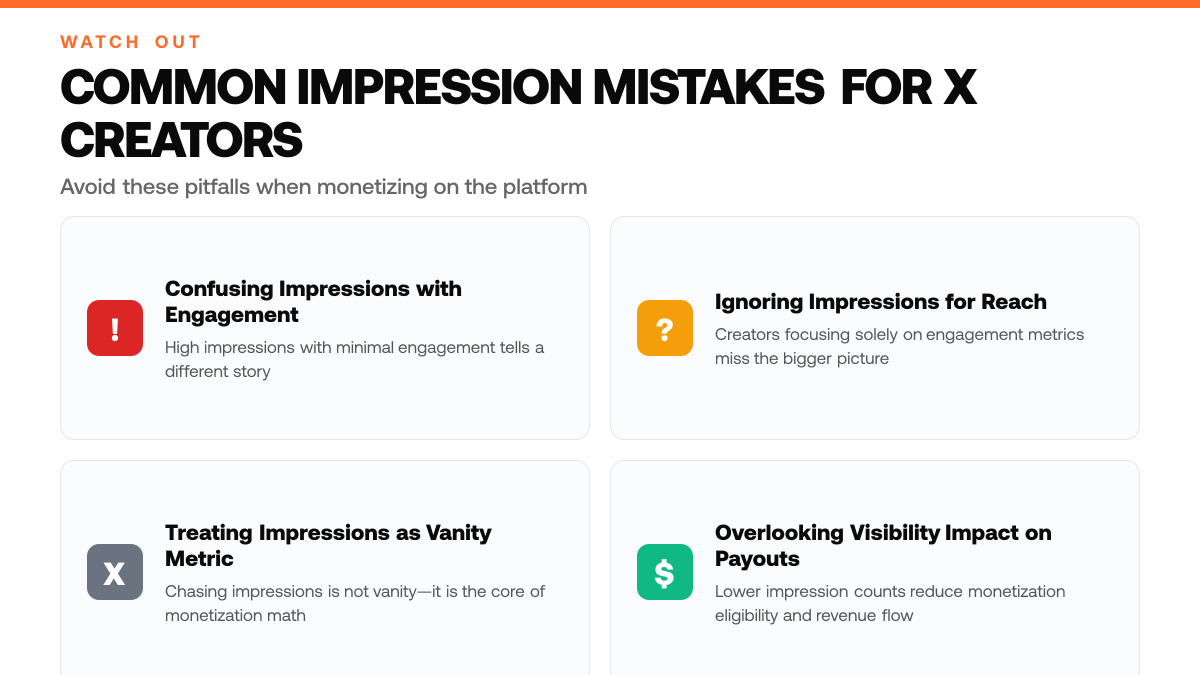
Mistake: Confusing impressions with engagement and optimizing for likes instead of reach
Creators often chase vanity metrics like likes and replies, assuming high engagement equals growth. This wastes effort on content that pleases a tiny fraction of followers while ignoring the broader audience. Impressions, the total number of times your tweet appears on screens, drive monetization and follower growth far more than engagement alone. Shift focus to content that resonates with your full audience, not just your most vocal commenters. Track impression trends separately from engagement to see what actually expands your reach.[2]
Do / Don't: Building Impression-Focused Strategy
| Focus Area | Do This | Don't Do This |
|---|---|---|
| Monetization Foundation | Prioritize impression growth as your primary lever for earnings | Chase engagement metrics while ignoring reach |
| Content Tracking | Monitor impressions alongside engagement to identify resonant topics | Focus solely on likes and retweets as success signals |
| Visibility Strategy | Build content that reaches broad audiences consistently | Assume modest engagement rates mean your strategy is failing |
| Brand Partnerships | Use steady impression streams to attract sponsorship opportunities | Wait for perfect engagement before approaching brands |
Mistake: Posting inconsistently or at poor times despite creating high-quality content
Even excellent tweets fail to generate impressions if they're posted when your audience isn't active or if your posting rhythm is erratic. Algorithms reward consistency, and timing determines who sees your content in the first place. Audit your analytics to identify when your followers are most active, then commit to a regular posting schedule during those windows. Consistency signals reliability to both the algorithm and your audience, multiplying impressions over time.[2]
Mistake: Ignoring impression data when deciding what content to create next
Creators often repeat content formats that feel comfortable without checking which tweets actually drove impressions. This perpetuates low-reach patterns. Review your top-performing tweets by impressions, not likes, and identify common themes, formats, or topics. Double down on what genuinely reaches people, then test variations. Impression-driven content decisions compound over weeks, building momentum faster than guessing or following trends.
Frequently Asked Questions
How do impressions directly affect my X monetization payout?
Impressions are a core metric in X's monetization system, the more times your posts are seen, the higher your potential earnings. X's payout calculation weighs impressions alongside engagement and other factors to determine creator revenue. Understanding this relationship helps you prioritize content that reaches wider audiences rather than chasing vanity metrics alone.[5]
What's the fastest way to increase impressions on my posts?
Strategic content planning and audience understanding are your primary levers. Study which topics, formats, and posting times resonate most with your followers, then double down on those patterns. Consistent posting, clear hooks in your opening lines, and genuine engagement with your niche community compound impressions over time, there's no shortcut, but intentionality accelerates growth.
Can I boost impressions without sacrificing authenticity?
Yes. Authenticity and reach aren't opposites, they're aligned. The most sustainable impression growth comes from creators who understand their audience deeply and craft content that genuinely serves them. Analyze your best-performing posts to spot patterns in your authentic voice, then lean into those themes. Forced or inauthentic content typically underperforms because audiences sense the disconnect.
Start your 7-day trial
Grow on X without sounding like everyone else. The right tool learns from your top posts and the leading voices in your niche, then drafts content in your voice. You edit, approve, and ship.
Start free trialSources
Read next
- SupaBird Review (2026): Features, Pricing, Pros and Cons - SupaBird review for creators and solopreneurs: AI content generation, X Coach, MCP for Claude, pricing, trial terms, strengths and limitations.
- X Original Content Rewards: what changed and how to qualify in 2026. - X is shutting down Creator Revenue Sharing after September 7 and replacing it with Original Content Rewards. The new 500,000-impression threshold, qualified-view rules, final payout dates, and what existing creators need to do next.
- How to Meet X Monetization Requirements in 30 Days - How to Meet X Monetization Requirements in 30 Days. A practical guide to what works, what to skip, and how to get started.