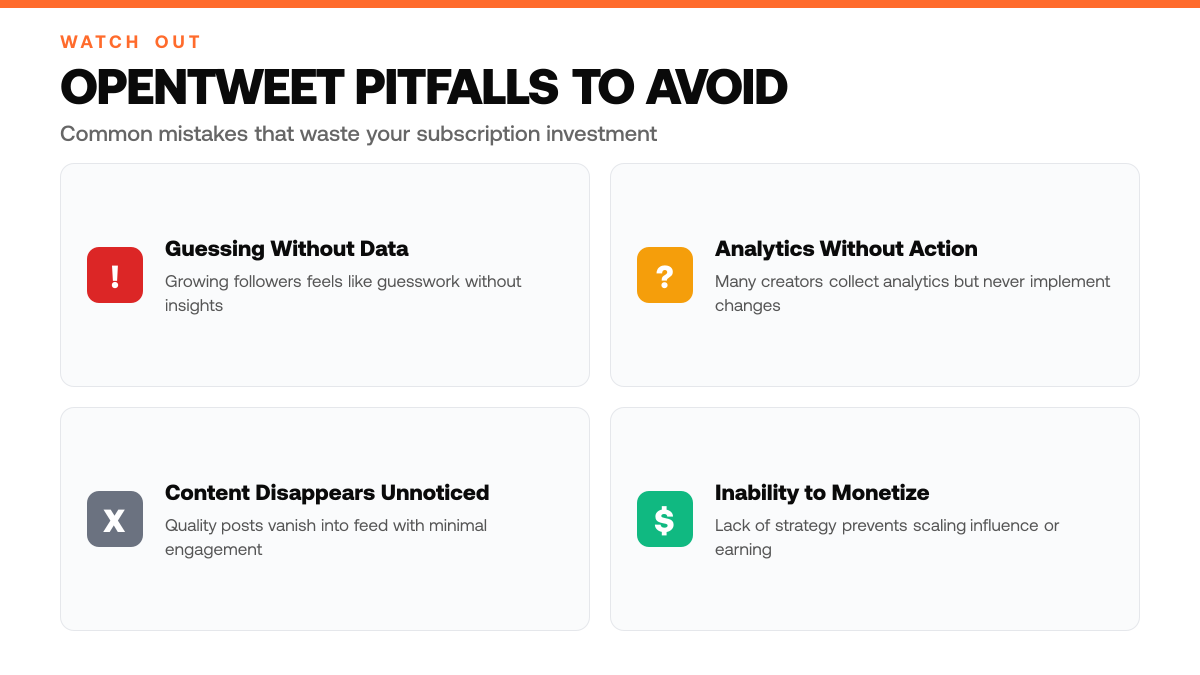
Many solo creators on X spend hours crafting posts, only to watch them disappear into the feed with minimal engagement. The frustration is real: you're writing quality content, but without a dedicated marketing team or data-driven insights, it's nearly impossible to know what actually resonates with your audience. Growing followers and increasing impressions feels like guesswork.
Solo creators and solopreneurs face a unique challenge, balancing the demands of content creation with the strategic work of audience growth. Most lack the resources to hire specialists or run expensive experiments to figure out what works. This gap between creating and growing is where many creators get stuck, unable to scale their influence or monetize their work effectively.
This review examines OpenTweet, an AI-powered tool designed specifically for X creators seeking to optimize content performance and grow their audience. We'll break down what it does, who it's built for, how it compares to other approaches, and whether the investment makes sense for your specific situation in 2026.
TL;DR
- OpenTweet delivers analytics that show creators which posts resonate most with their X audience, helping inform content strategy decisions.
- The tool's real value emerges only if you're willing to act on the data, analyzing trends and adjusting your posting approach accordingly.
- Many creators collect analytics but never implement changes, making the subscription worthwhile only for those committed to optimization.[3]
Understanding OpenTweet and AI-Powered Tweet Analytics
What Is OpenTweet?
OpenTweet is an AI-driven analytics tool designed to help creators understand what makes their tweets resonate on X. Rather than relying on intuition or trial-and-error, the platform analyzes your tweet performance, audience behavior, and content patterns to identify the specific factors driving engagement. By processing real performance data, OpenTweet surfaces actionable insights that reveal which topics, posting times, formats, and messaging styles generate the most meaningful interactions with your audience.[2]
Why Understanding Your Audience and Content Performance Matters
Sustainable growth on X requires more than posting frequently, it demands knowing what your audience actually wants to see. Many creators spend months or years guessing at content strategy, only to plateau when their assumptions don't match reality. Understanding your audience's preferences and content performance is foundational to building lasting influence. OpenTweet removes the guesswork by providing data-backed recommendations that help you allocate your creative energy toward content that genuinely drives followers, impressions, and monetization opportunities.[2]
The Role of Data in Creator Growth Strategy
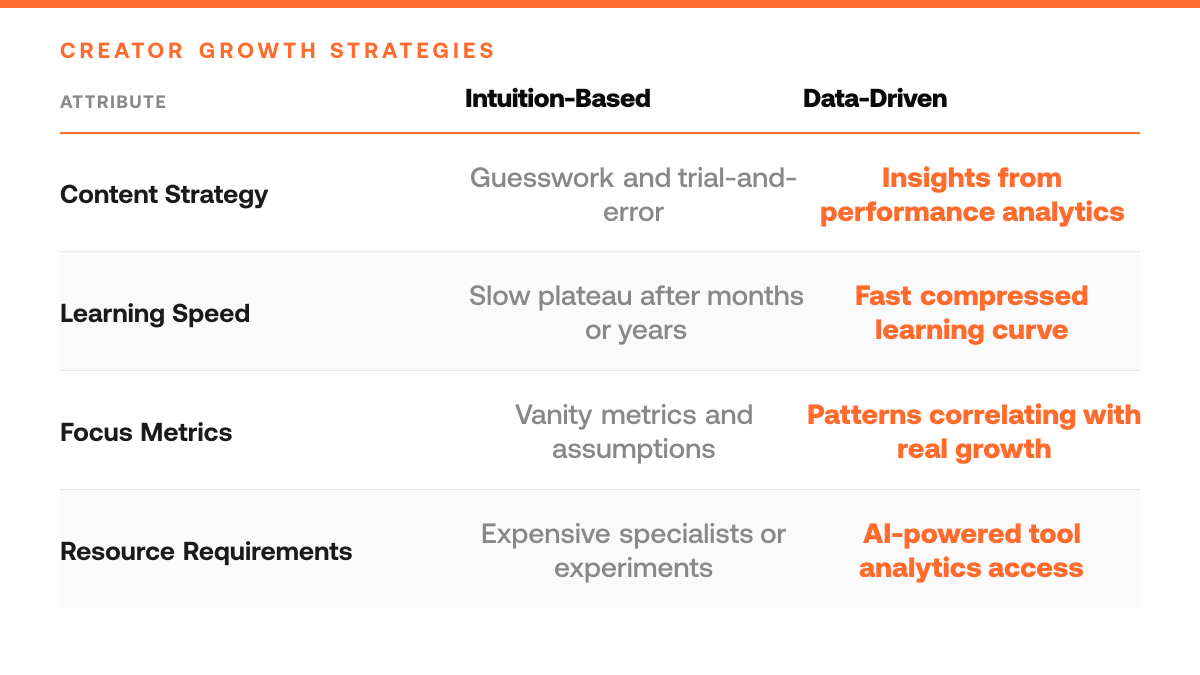
The most successful creators on X treat their account like a business, tracking what works, doubling down on winners, and cutting what doesn't. AI-powered analytics tools have become essential for this approach, enabling creators to move beyond vanity metrics and focus on patterns that correlate with real growth. For solo creators and solopreneurs building an audience from scratch, this data-driven mindset compresses the learning curve and helps establish a repeatable content formula faster than creators who rely on instinct alone.
Step-by-Step Process
1. Connect Your X Account and Authorize Data Access
Start by signing into OpenTweet and linking your X account through the OAuth authentication flow. Grant the tool permission to access your historical tweet data, engagement metrics, and audience insights. This authorization allows OpenTweet to analyze patterns in your past content performance and identify what resonates with your followers. Complete this setup within your account settings to unlock the full suite of optimization features.[1]
2. Review AI-Generated Insights and Content Recommendations
Once your data is analyzed, examine the AI-generated insights dashboard. OpenTweet surfaces recommended content angles, optimal posting times, and audience engagement patterns specific to your account. Study which topics, formats, and messaging styles have historically driven the most impressions and follower growth. Take time to understand the reasoning behind each recommendation so you can adapt insights to your unique voice and niche.[1]
3. Test Recommended Content Angles in Live Tweets
Apply the tool's recommendations to your next batch of tweets. Experiment with the suggested content angles, posting cadence, and engagement hooks. Publish tweets that align with the data-driven insights while maintaining authenticity. Track performance metrics for each test tweet, impressions, engagement rate, follower additions, to validate whether the recommendations translate to real results in your specific audience context.
4. Measure Results and Compound Improvements Over Time
Compare your test results against baseline performance metrics from before applying OpenTweet's recommendations. Document which content angles, posting strategies, and messaging patterns delivered the strongest audience growth and monetization signals. Repeat this cycle consistently, testing, measuring, and refining, so that each iteration builds on the last. Over weeks and months, small improvements compound into meaningful gains in follower count, impressions, and monetization potential.
How This Works in Practice
Example 1: The Creator Fixing Engagement Gaps
Picture a creator who posts consistently but watches engagement plateau, some tweets spark conversation, others vanish. They've been guessing at what works: is it the topic, the time of day, or the format? OpenTweet surfaces the pattern. Over 2 weeks, they review which topics (product launches, personal stories, industry takes) drive replies and retweets, which posting times catch their core audience awake, and whether threads outperform single tweets. They spot that their audience engages most with behind-the-scenes content posted in the evening, not morning news takes. They shift their mix: fewer generic hot-takes, more narrative-driven posts at 6 PM. Within a month, replies and retweets climb noticeably. The guesswork stops; the data guides every decision.
Creator Growth: Guesswork vs Data-Driven Approach
| Without Analytics | With OpenTweet Analytics |
|---|---|
| Spend hours crafting posts with minimal engagement | Analyze performance patterns to identify what resonates |
| Plateau when assumptions don't match audience reality | Double down on winners and cut what doesn't work |
| Rely on intuition and trial-and-error strategy | Move beyond vanity metrics to focus on real growth patterns |
| Unable to scale influence or monetize effectively | Allocate creative energy toward content that drives followers and impressions |
Example 2: The Solopreneur Building a Monetizable Brand
Consider a solopreneur who wants to grow from hobby tweeter to someone sponsors and communities actually pay attention to. They know their niche (say, indie SaaS or personal finance) but haven't clarified which angle attracts the *right* followers, the ones who buy, refer, or sponsor. OpenTweet reveals which sub-topics within their niche pull engaged, high-quality followers versus casual browsers. They notice that tweets about founder psychology and decision-making attract builders and investors, while tips-and-tricks posts attract tire-kickers. They lean into the former, refine their bio and pinned tweet to signal that positioning, and watch follower quality shift. Six months later, sponsorship inquiries arrive from relevant brands, and their audience feels like a genuine community, not a vanity metric. The tool didn't create the opportunity, it eliminated the noise so the right people found them.
Why Clarity Beats Guessing
Both creators share a common win: they stopped optimizing for vanity and started optimizing for signal. One accelerated engagement by matching content to audience rhythm; the other attracted higher-intent followers by sharpening positioning. Neither outcome required luck or viral moments, just honest data about what their existing audience actually responded to, and the discipline to act on it.
OpenTweet Investment Readiness Checklist
- Block time on your calendar for weekly content analysis and strategy adjustments based on OpenTweet insights
- Audit your last 20 posts on X to identify which topics, formats, and posting times generated the most engagement
- List your top three X growth bottlenecks, low follower velocity, weak engagement rates, or unclear audience demographics
- Define your monetization target for the next 6 months and map which audience metrics directly support that goal
- Document your current monthly time investment in content creation and audience building to assess capacity for optimization work
Common Mistakes to Avoid
Mistake: Treating OpenTweet as a content creation substitute rather than a strategic enabler
Many creators expect the tool to generate engagement automatically, but OpenTweet amplifies only the work you put in. Without consistent, authentic posting, the platform's recommendations and insights sit unused. Fix this by committing to a regular posting schedule first, then using OpenTweet's analytics to refine *what* you share, not to replace the act of sharing itself.[4]
OpenTweet Setup and Optimization Process
| Phase | Action | Outcome |
|---|---|---|
| Account Connection | Link X account through OAuth and authorize data access | Unlock full suite of optimization features |
| Data Analysis | Review AI-generated insights and content recommendations | Identify topics, posting times, and formats that drive engagement |
| Implementation | Act on data by adjusting posting approach and strategy | Compress learning curve and establish repeatable content formula |
Mistake: Abandoning OpenTweet's recommendations after a few posts or ignoring test results over a meaningful period
Creators often expect immediate results and dismiss the tool when growth doesn't spike within days. Audience building on X requires sustained experimentation. If you don't apply OpenTweet's insights consistently or measure performance over weeks, not days, you'll never see whether the recommendations actually work for your niche. Test one insight thoroughly before moving to the next.[4]
Mistake: Over-optimizing your voice based on analytics data and losing authenticity in the process
Analytics can tempt you to chase every engagement signal, reshaping your message to match trending patterns rather than your actual expertise or perspective. This erodes the authentic connection that makes followers trust you in the first place. Use OpenTweet's data to understand *timing* and *format*, not to abandon your genuine point of view.
Frequently Asked Questions
Who should actually use OpenTweet, is it for beginners or experienced creators?
OpenTweet is most valuable for creators who already post regularly and want to optimize their existing efforts rather than start from scratch. If you're new to X and haven't established a posting rhythm, focus on building consistency first. The tool shines when you have weeks of content history to analyze and a clear sense of your audience. It works best when combined with a clear monetization strategy and consistent content calendar, so you're not just posting more, you're posting smarter toward a defined goal.[5]
How long does it take to see real results from OpenTweet?
Results typically emerge over weeks of consistent application, not days. Patience and iteration are essential. You'll need time to test the tool's recommendations, observe which formats and topics resonate, refine your approach based on analytics, and let your audience respond. Expect a learning curve as you internalize the insights, quick wins are rare, but compounding growth becomes visible once you've applied the feedback across multiple posting cycles.[5]
What happens if I use OpenTweet but don't have a monetization plan?
You'll likely feel frustrated. Growing followers and impressions without a monetization strategy is like building an audience with no destination. OpenTweet optimizes your content for engagement and reach, but those metrics only matter if they feed into something, sponsorships, affiliate links, a product launch, or a service offer. Define your monetization path before relying on the tool, so every optimization serves a real business goal.
Sources
Try the loop on your own cohort.
Pick three accounts you would like to be at in 12 months. ClimbX pulls their recent outliers, tags them, and drafts in your voice off what is currently working. Edit, ship, watch the loop tighten.
Read next
- 5 X Premium Features Worth the Cost (Honest Review) - 5 X Premium Features Worth the Cost (Honest Review). A practical guide to what works, what to skip, and how to get started.
- Best Sprout Social Alternatives in 2026 - Compare Sprout Social alternatives by team size, approvals, network coverage, analytics, inbox needs, and verified public pricing.
- Is Buffer Worth It in 2026? An Honest Review - Is Buffer Worth It in 2026? An Honest Review. A practical guide to what works, what to skip, and how to get started.