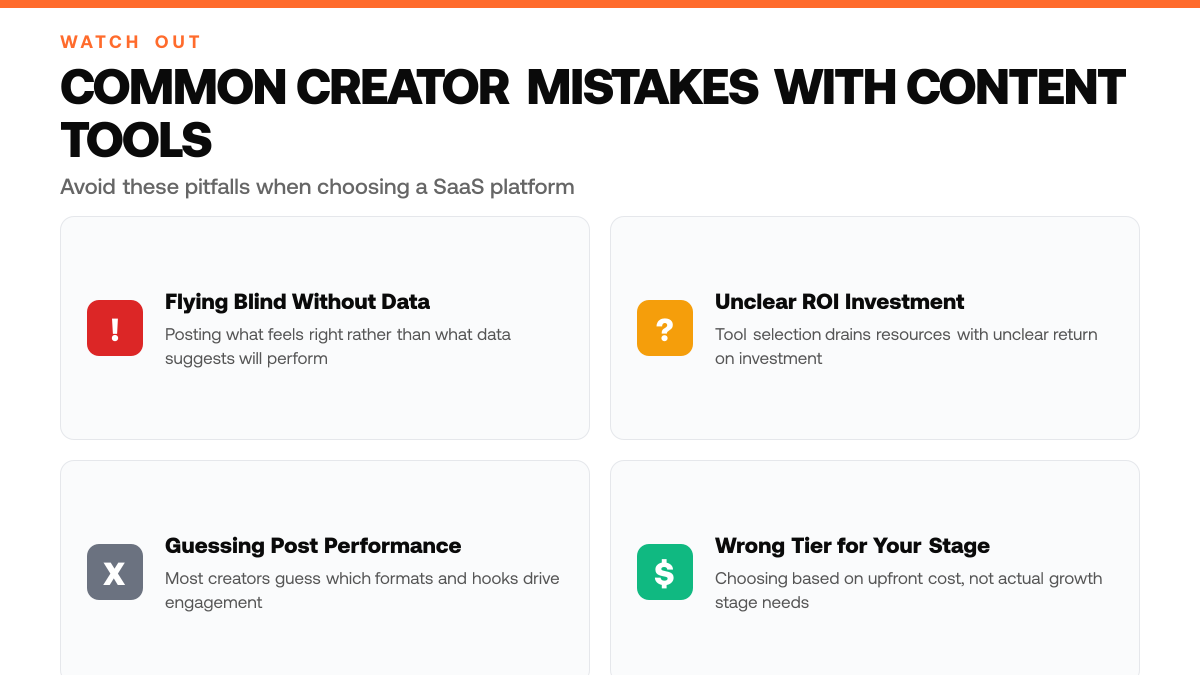
Every solo creator on X faces the same friction point: figuring out which content ideas will actually resonate with their audience before investing time in writing and posting. The platform rewards consistency and strategic timing, but most solopreneurs are flying blind, posting what feels right rather than what data suggests will perform. That uncertainty makes tool selection critical, especially when budget is tight and every dollar spent needs to justify itself through measurable audience growth.
For creators building audiences on X, a content optimization platform can either accelerate growth or drain resources with unclear ROI. Pricing transparency matters because solopreneurs need to know upfront whether the investment in AI-powered content features aligns with their specific growth goals and what they can realistically afford to spend. Understanding the cost structure helps creators make informed decisions about whether a tool fits their business model.
This article breaks down what you'll actually pay for a SaaS platform designed specifically for solo creators and solopreneurs building audiences on X, examines how pricing tiers map to different growth stages, and helps you determine whether the investment makes sense for your current audience size and monetization goals. Most creators guess which post formats and hooks drive engagement, then watch competitors' outlier wins without knowing what made them work, ClimbX scans your highest-performing posts and competitor breakouts to surface the exact patterns that compound growth, then drafts new posts in your voice using both signals.
TL;DR
- Tweet Hunter offers multiple pricing tiers designed to match different creator budgets and feature requirements.
- Each tier unlocks varying levels of content scheduling, analytics, and audience growth tools for X creators.
- Most creators choose based on posting volume and analytics depth needed, not just upfront cost.[1]
Understanding Tweet Hunter Pricing
What Is Tweet Hunter?
Tweet Hunter is a platform designed to help content creators optimize their presence on X (formerly Twitter) through automated tools and artificial intelligence. The platform combines content discovery, scheduling, and analytics into a single workspace, allowing creators to identify trending topics and high-performing content patterns without manual research. At its core, Tweet Hunter addresses a fundamental challenge for solo creators: the time-intensive process of finding what resonates with audiences and planning a consistent posting strategy. Rather than spending hours analyzing competitor content or testing different posting times, the platform's AI-driven approach streamlines these decisions, making content strategy more data-informed and less dependent on trial-and-error.[3]
Why Tweet Hunter Matters for Solopreneurs
For solopreneurs building an audience on X, time is the scarcest resource. Most solo creators juggle content creation, audience engagement, and business operations simultaneously, leaving little room for strategic experimentation. Tweet Hunter's core value lies in automating content discovery and optimization without requiring a team, which means a single creator can execute a sophisticated content strategy that would typically demand multiple people. The platform's AI capabilities reduce the guesswork in content strategy that solo creators typically face, replacing intuition-based decisions with insights derived from real engagement data. This shift from guessing to knowing enables solopreneurs to focus energy on writing and building relationships rather than analyzing what works.[3]
The Solopreneur Content Challenge
Solo creators face a unique bottleneck: scaling audience growth without scaling team size. Traditional content strategy requires constant monitoring of trends, competitor activity, and audience behavior, tasks that demand both expertise and availability. Many solopreneurs lack the budget to hire a social media manager or content strategist, so they either operate without strategic guidance or spend disproportionate time on research that distracts from actual content creation. This gap between ambition and capacity is where automation tools become essential. By handling discovery, optimization, and scheduling, platforms enable solo creators to compete with larger, better-resourced accounts while maintaining the lean, agile structure that defines solopreneur operations.
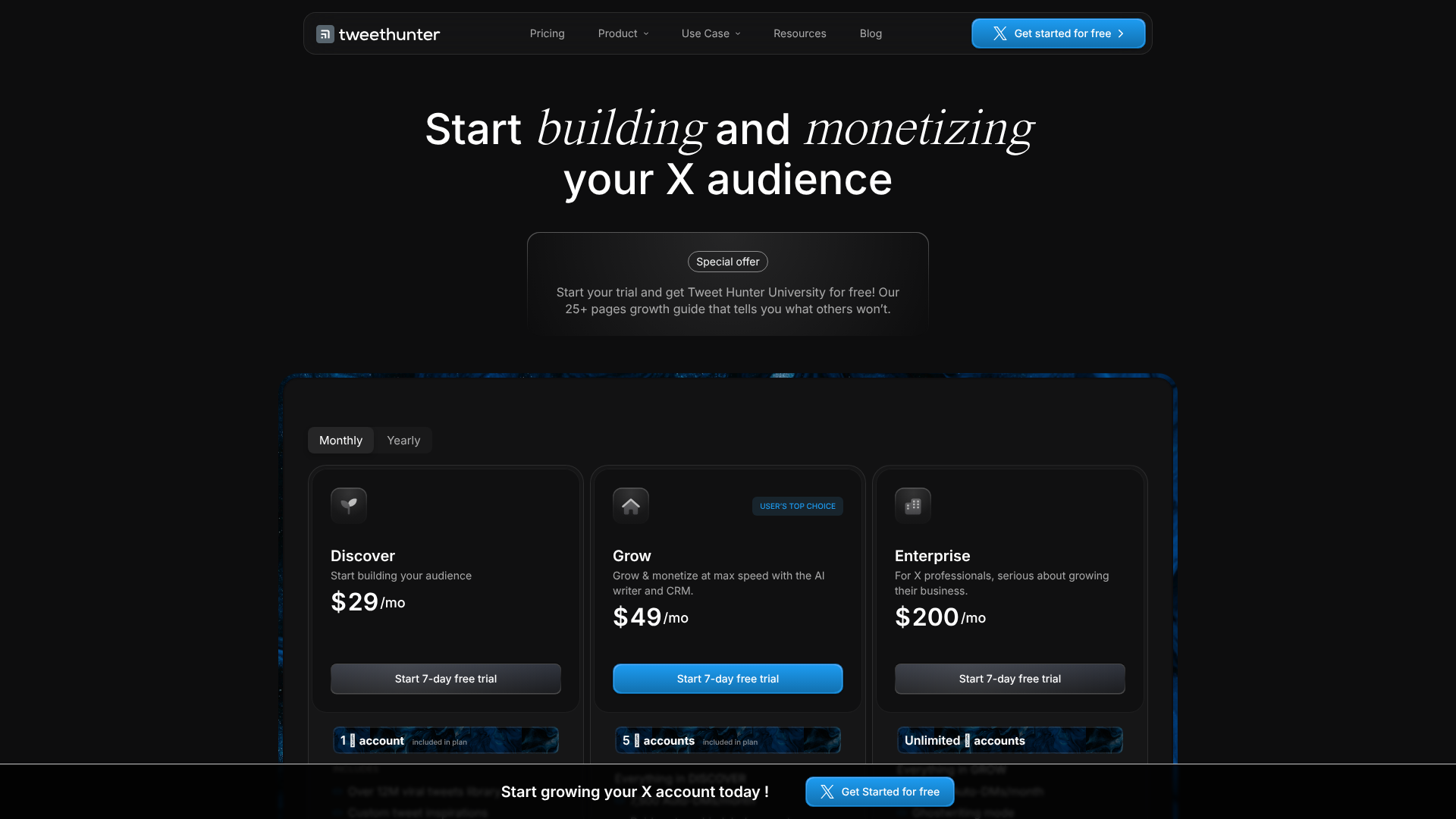
Key Numbers for Tweet Hunter Pricing 2026: What You'll Actually Pay
- $49/month for the Discover plan, which includes all features except AI-powered writing.[2]
- $99/month for the Grow plan, which adds AI-writing capabilities for content creation.[2]
- Annual billing saves approximately 20% compared to monthly billing across all plans.[2]
- 7-day free trial plus 30-day refund policy, allowing up to 37 days of risk-free use.
- No hidden fees, no per-channel charges, add-on costs for plan features, or overage fees.[2]
Step-by-Step Process
1. Audit your current audience size and growth stage
Count your existing followers on X and assess whether you're in the early-stage, growth, or established creator phase. Early-stage creators with smaller audiences have different tool needs than established accounts with thousands of followers. Document your current monthly impression count and engagement rate if available. This baseline helps you avoid paying for enterprise features you won't use or missing critical tools for your current level. Your growth stage directly determines which pricing tier aligns with your actual workflow.
2. Calculate your weekly content output and posting frequency
Track how many tweets, threads, or scheduled posts you publish per week. Determine whether you post daily, several times weekly, or less frequently. Higher-volume creators benefit from automation and batch-scheduling features, while lower-frequency posters may not need those capabilities. This metric reveals whether you're paying for scheduling slots you'll never fill or whether a basic tier leaves you unable to manage your actual publishing cadence. Honest frequency assessment prevents both waste and bottlenecks.
3. Identify your monetization goals and current revenue stage
Clarify whether you're building an audience for future monetization, already earning through sponsorships or affiliate links, or scaling an existing revenue stream. Creators pursuing monetization need analytics and audience insights tools to prove value to sponsors, while those still in growth mode may prioritize reach and engagement features instead. Your revenue stage determines which paid features directly impact your bottom line versus nice-to-have extras. Matching your monetization timeline to tier capabilities ensures every dollar spent moves you toward income.
How This Works in Practice
Example 1: The Emerging Creator's Growth Foundation
Picture an emerging solopreneur who's been posting on X for several months and has built a modest following but isn't sure which tweets resonate with their audience. They're spending hours manually checking analytics and experimenting with posting times, but growth feels stalled. With a foundational Tweet Hunter tier, they gain access to content performance insights and scheduling tools that reveal which topics and formats drive the most engagement. Over the next few weeks, they spot patterns, certain posting times and thread structures consistently outperform others. By adjusting their strategy based on these insights rather than guessing, they begin to see steady follower growth and higher impressions per tweet. The lower-tier investment matches their current stage: they need the essentials to optimize, not the advanced features designed for creators already monetizing at scale.
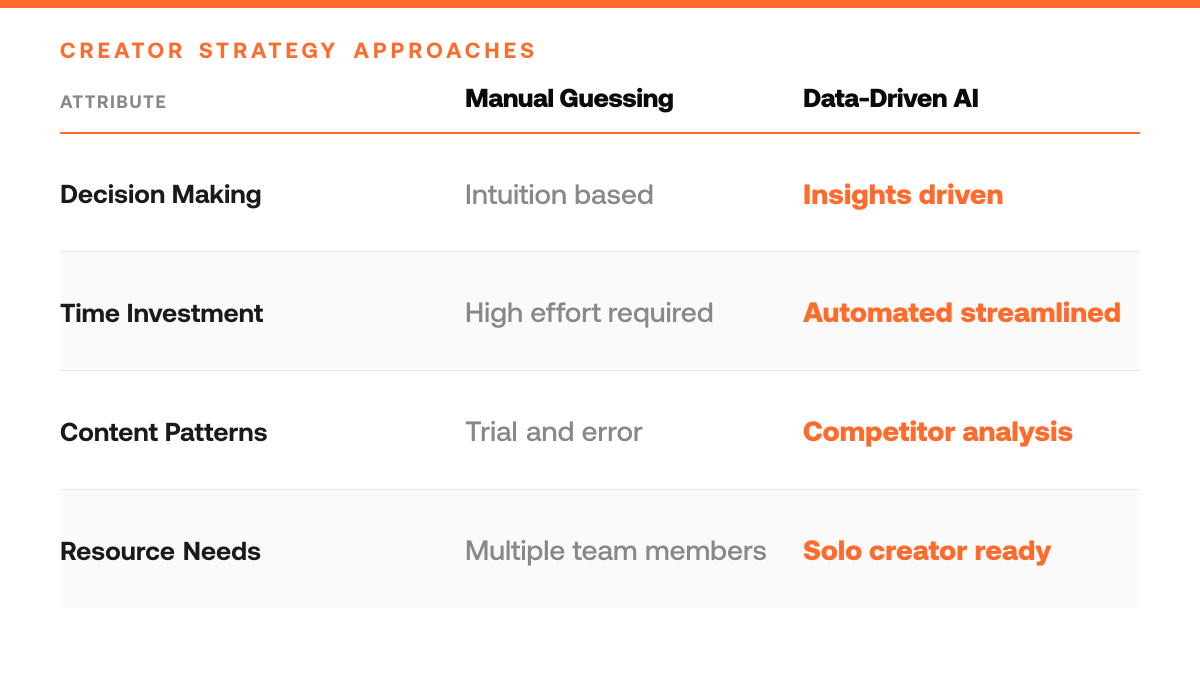
Solo Creator Content Strategy: Guessing vs Data-Driven
| Approach | Process | Outcome |
|---|---|---|
| Guessing (Traditional) | Post what feels right, test different times manually, analyze outlier wins without knowing why | Inconsistent growth, wasted time on trial-and-error, unclear ROI on effort |
| Data-Driven (Tweet Hunter) | Scan highest-performing posts and competitor patterns, use AI to draft posts in your voice, schedule strategically | Compound growth from proven patterns, time spent on writing and relationships, measurable audience growth |
Example 2: The Established Influencer's Monetization Leverage
Consider an established creator who has already built a sizable following and is actively monetizing through sponsorships, digital products, and audience memberships. They're no longer focused on basic growth tactics, they need deeper audience insights, competitive analysis, and the ability to manage multiple content pillars and campaigns across their network. A premium Tweet Hunter tier gives them access to advanced analytics, trend forecasting, and tools to identify emerging opportunities before their competitors do. They can segment their audience, test messaging variations at scale, and track which content types drive the highest-value conversions. The investment in a higher tier directly supports their monetization goals because the ROI from smarter content decisions and faster trend identification quickly justifies the cost. Different creators at different stages need different capabilities, and pricing tiers reflect that reality.
Why Tier Alignment Matters
Both creators benefit from Tweet Hunter, but the tier that makes sense depends on where they are in their journey. An emerging solopreneur doesn't need every advanced feature, they need clarity on what works. An established influencer monetizing at scale needs the depth and speed that premium features unlock. Matching your tier to your actual growth stage and monetization goals ensures you're not overpaying for features you won't use, and not underpaying by missing the tools that would accelerate your income.
Tweet Hunter Pricing Evaluation Checklist
- List your current monthly content output and audience size to match against each Tweet Hunter tier's feature set.
- Calculate your total social media tool budget and compare it against Tweet Hunter's pricing to confirm affordability.
- Identify which Tweet Hunter features (scheduling, analytics, content discovery) align with your immediate growth goals.
- Review the free trial or starter tier to test Tweet Hunter's interface before committing to a paid plan.
Common Mistakes to Avoid
Mistake: Choosing a pricing tier based on feature count instead of your actual content output and monetization readiness
Solo creators often upgrade to premium tiers because they include more features, scheduling slots, analytics, or AI tools, without asking whether they'll actually use them or generate revenue to justify the cost. The real cost isn't the monthly fee; it's paying for unused capacity while your content strategy isn't mature enough to monetize. Before upgrading, audit your current posting frequency, engagement rates, and revenue per follower. Match your tier to your *actual* output needs and proven monetization channels, not aspirational feature lists.
When to Prioritize Tweet Hunter for Your Stage
| Creator Situation | Core Bottleneck | Tweet Hunter Solves |
|---|---|---|
| Solo creator juggling multiple roles | No time for trend monitoring or competitor analysis | Automates content discovery and optimization without hiring |
| Scaling audience without scaling team | Can't afford social media manager or analyst | AI-driven insights replace need for additional staff |
| Uncertain which content resonates | Spending hours guessing at post formats and hooks | Surfaces exact patterns from your data and competitors |
| Need consistent posting strategy | Lack expertise in timing and format optimization | Data-informed decisions replace intuition-based guessing |
Mistake: Overcommitting to a premium tier without a clear timeline for audience growth or sponsorship revenue
Solopreneurs frequently lock into higher-cost plans assuming they'll hit monetization milestones faster than they do. If your follower count or engagement hasn't reached sponsorship thresholds, a premium tier becomes a fixed cost with no offsetting income. Instead, start with a tier that covers your *current* needs plus modest growth, then upgrade only after you've signed a sponsorship deal, launched a paid product, or hit a specific follower milestone. Track your cost-per-follower and revenue-per-month to know when the upgrade pays for itself.
Mistake: Underestimating how much content you'll actually need to produce to stay competitive on X
Many solo creators pick a plan assuming they'll post a few times per week, then realize consistent growth demands daily or near-daily output. Underestimating content volume means either burning out trying to manually keep up or paying for scheduling features you thought you wouldn't need. Before committing to any tier, calculate your realistic posting cadence based on your niche, audience size, and available time. Choose a plan with enough scheduling slots and batching capacity to support that volume without friction, otherwise you'll either abandon the tool or upgrade mid-cycle at a higher cost.
Frequently Asked Questions
What happens to my Tweet Hunter costs as my audience grows?
Tweet Hunter's pricing tiers are designed to scale with your account size and content output. As your follower count and posting frequency increase, you'll move into higher tiers that reflect greater API usage and feature access. Understanding which tier matches your current audience size prevents overpaying for unused features or hitting limits unexpectedly. Most solopreneurs start on a lower tier and upgrade only when their content strategy demands more scheduling slots, analytics depth, or automation capacity.[2]
Can I cancel my Tweet Hunter subscription anytime?
Cancellation policies vary by plan type and billing cycle. Before committing to any tier, review the specific cancellation terms for monthly versus annual billing, some annual plans may have different exit conditions than month-to-month subscriptions. Clarifying this upfront prevents surprise charges or locked-in commitments that don't match your content roadmap. Contact Tweet Hunter's support team directly for the most current cancellation policy details.[2]
What features differ between Tweet Hunter pricing tiers?
Each tier unlocks different capabilities, typically ranging from basic scheduling and analytics to advanced audience insights, AI-powered content suggestions, and priority support. Lower tiers may cap monthly posts or limit historical data access, while higher tiers remove those restrictions and add collaborative features. Comparing your actual needs (posting frequency, analytics depth, team size) against each tier's feature set ensures you pay only for what you'll use and avoid misaligned expectations about what your plan includes.[2]
Start your 7-day trial
Grow on X without sounding like everyone else. The right tool learns from your top posts and the leading voices in your niche, then drafts content in your voice. You edit, approve, and ship.
Start free trialSources
Read next
- ClimbX vs Tweet Hunter: Which X Growth Tool Is Better? - Compare ClimbX and Tweet Hunter across inspiration, AI writing, scheduling, replies, analytics, automation, pricing and the founder workflow each fits best.
- Hypefury Pricing 2026: What You'll Actually Pay - Hypefury Pricing 2026: What You'll Actually Pay. A practical guide to what works, what to skip, and how to get started.
- Typefully Pricing 2026: What You'll Actually Pay - Typefully Pricing 2026: What You'll Actually Pay. A practical guide to what works, what to skip, and how to get started.