Key takeaway
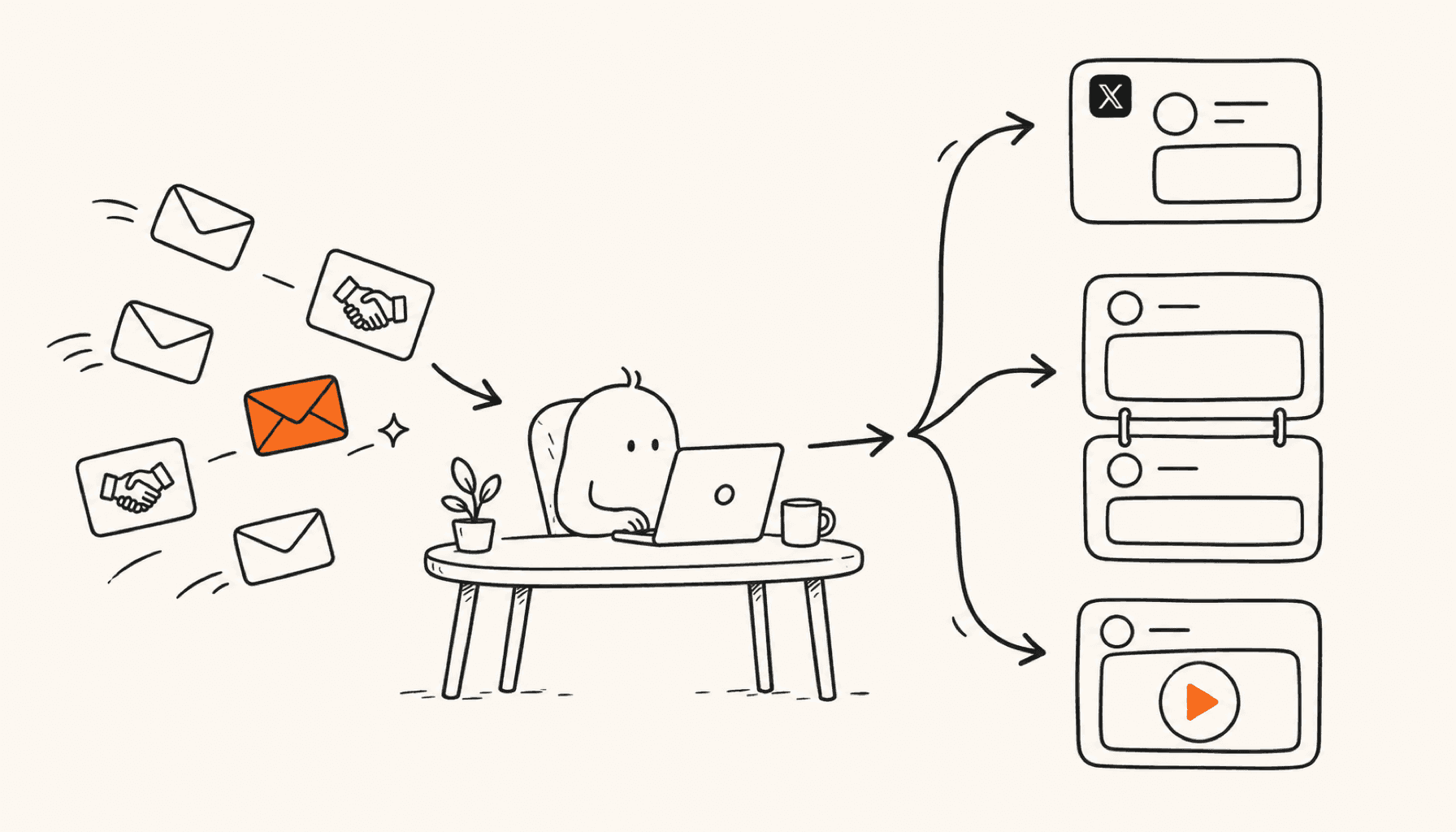
I did not plan to get X sponsorships. The first offers came at around 5,000 followers. My normal posts got roughly 2,000 to 3,000 views back then. Today sponsorships bring in a fairly steady $1,000 per month. Most single posts are priced between $150 and $250. There is no magic follower number. What you can repeat is this: get known by one specific market, keep its trust, and turn each offer that comes in into a clear deal.
Nobody told me my account was now big enough for sponsors. I did not make a media kit at 4,999 followers, cross 5,000, and start earning the next morning. I kept posting about SaaS, AI, building products, and growing on X. Then people building products for that audience started to notice me.
That matters. Sponsorships are one of the realistic ways to make money on X. But they usually come from attention and trust. You cannot force them on a schedule. You can make your account easier to buy from. You cannot control when the first good company will notice it.
My actual starting point: 5K followers and 2K to 3K average views
My first offers came on their own at around 5,000 followers. More important, a normal post was getting roughly 2,000 to 3,000 views. A sponsor could count on that. Their post would reach a real group of founders and builders.
Those numbers are an example, not a minimum. An account with 2,000 followers who fit well can be worth a lot to a niche software company. An account with 50,000 random or inactive followers may be worth little. Sponsors pay for attention from the right people. They also pay for the judgment and trust of the person posting.
Post often about the same set of problems. Get steady reach, and do not count on one viral post. Make it obvious how to contact you. Offers may still come at random times. But a buyer can quickly see who you reach and why your voice fits.
Where creators can get listed and create more deal flow
Offers can come in through DMs and email. But a creator marketplace makes you easier to find when a brand is looking. The good ones show more than a follower count. They show typical reach, who your audience is, what you offer, and a clear way to start and run a campaign.
Colleator
An X creator marketplace where brands can compare verified creators and their offers. Proposals, payment, deliverables and live results all sit in one place. I am listed there myself. So a sponsor can see my audience and typical reach before they contact me. This tracked link is part of a partner deal.
unfair.so
Another marketplace where companies can browse creators by their real audience and start campaigns. It is a second way to be findable at the moment a buyer is already looking. You do not have to rely only on cold outreach.
A listing does not create demand. It just makes you easier to find and pay. Keep the profile up to date. Use median impressions, not your one viral peak. List the formats you actually want to sell. Make your price or contact info clear. Your normal posts still have to make a buyer want your audience and your voice.
The sponsor-fit test: would I discuss this product without the deal?
Fit comes first. The product should tie into a problem your audience already knows. That gives you an honest angle. It does not let you claim results you have not measured. And it does not mean every follower needs the product. Good fit means a deal is worth considering. You still have to judge the product honestly.
Before you accept any deal, ask three things. Does the product solve a problem your audience knows? Can you explain it without reading the landing page out loud? Would you be fine answering critical replies after it goes out? If any answer is no, the quick fee is usually not worth the trust you lose.
The three sponsored formats I see most often on X
| Format | What it is | What changes the price |
|---|---|---|
| Sponsored post | A new standalone post built around the product and your own angle. | Research, concept work, copy, media, revisions, and usage rights. |
| Sponsored QRT | Your comment above an existing sponsor post. X now calls this a quote post; many creators still say QRT, short for quote retweet. | The quality of the original post, your angle, copy work, and approval scope. |
| Sponsored video post | A native video, demo, walkthrough, or creator-led explanation. | Scripting, recording, editing, reshoots, your likeness, and reuse in paid ads. |
A QRT is not worth less just because it looks simpler. A strong quote gives the sponsor's post context. It also lends it some of your trust. But it should still sound like you. If the sponsor wants its exact ad copy pasted above its post, it is buying ad space. It is not paying for your judgment.
Video is normally priced higher. A text post may take one writing session. A video can need an idea, a script, setup, several takes, editing, captions and approval. The brand may want to run that video as an ad or reuse your face on other channels. That is a separate right. Do not throw it into the organic post by accident.
What I charge, and why there is no universal rate
Most of my sponsored posts currently land in the $150 to $250 range. With the number of deals I get now, that adds up to a fairly steady $1,000 per month. That is before costs. It goes up and down by month. And another account at the same follower count may not earn the same.
The useful lesson is the math. Four $250 deals equal $1,000. So do five $200 deals. You do not need a feed full of ads to make real side income. A few deals that fit can work, as long as your normal posts stay the reason people follow you.
I would price a deal from these inputs:
- median views on recent posts like the format they want;
- how closely your audience matches the sponsor's buyers;
- the creative work needed for text, visuals, or video;
- how many review rounds there are, and how tight the deadline is;
- whether the sponsor wants you to turn down its competitors;
- whether the brand can reuse the post, video, or your face elsewhere; and
- whether the first campaign did well enough to be worth repeating.
Enter the average views on your ordinary posts into the free X sponsored-post rate calculator. It gives a careful estimate of sponsor reach, using the real numbers behind one of my $150 deals. Use the result as a starting point. Then price video, revisions, exclusivity, and usage rights on top.
Do not work out an exact CPM from one viral post and sell it as guaranteed reach. Organic reach jumps around a lot. Sell a clear piece of work and access to the right audience. Then report the real result. Do not promise impressions, clicks, leads, or sales.
Turn an inbound message into a clean agreement
When an offer comes in, you do not need a 20-page media kit. You need enough info to decide if the product fits. And you need the job written down clearly, so it does not grow after you say yes.
| Term | Define it before saying yes |
|---|---|
| Deliverable | Standalone post, QRT/quote post, thread, or video |
| Angle | How you honestly frame it, and claims the sponsor can back up |
| Timing | When it goes out, which timezone, and how long it stays up |
| Review | One fact check, not endless rewrites or praise they write for you |
| Disclosure | Paid Partnership label plus clear wording where required |
| Reporting | A performance screenshot after an agreed number of days |
| Rights | Organic post only, unless paid usage rights are priced separately |
| Payment | Fee, currency, invoice details, and when you get paid |
A simple reply can be enough:
Thanks for reaching out. The product looks relevant to my audience because [specific reason]. Most of my current sponsored posts are $150 to $250 depending on format. Send the proposed deliverable, key claims, timing, review process, usage rights, and budget, and I can suggest an angle that fits my normal content. Any paid post will be clearly disclosed.
That reply checks if the buyer is serious, sets your price range and keeps your voice yours. A serious sponsor also gets what it needs to move ahead without a long sales call.
Write a useful post before you write an advertisement
The best sponsored posts start with a real problem your audience has. Name the situation. Say why the usual fix fails. Show where the product fits, and say how far your claim goes. Then give the reader one clear next step. The product should be part of the explanation. Do not just drop a brand name into a post about something else.
- 1Start with the problem. Use a situation your normal readers already know.
- 2Add your angle. Say why the product matters for your topic and your experience.
- 3Keep claims narrow. Keep what you saw apart from what the company says. Check the facts.
- 4Disclose clearly. Show it is paid before the reader acts on your recommendation.
- 5Report the result. Share the numbers you agreed on. Learn what would make a repeat deal worth it.
Disclosure is part of the deliverable
X counts a lot of things as paid partnerships. Organic paid partnership posts must use its Paid Partnership label. Depending on the law where you and your audience are, the post may also need clear wording like “Ad” or “Sponsored.” Free products, affiliate commission, discounts, swapping promotion and other perks can also count as a sponsorship you must disclose.
The FTC's guidance for social media says the relationship should be hard to miss. Put it right next to the recommendation. Do not hide it on your profile or behind another click. Other countries have their own rules. Put disclosure in the agreement and keep it in the final post. This section is practical guidance, not legal advice.
Protect the thing sponsors are paying for
Sponsor money only lasts while your account is worth listening to. If every third post is an ad, your normal reach and your readers’ trust can both drop. Post few enough sponsored posts that your account still keeps the promise in your bio.
- Say no to products that do not fit, even when the fee is good.
- Never guarantee a positive review, impressions, clicks, leads, or sales.
- Do not let a sponsor rewrite the post until it no longer sounds like you.
- Keep performance screenshots, so you can price future deals from real results.
- Raise your fee or take fewer deals before you fill your feed with weak ones.
The goal is not the most sponsored posts possible. It is a small, steady side income that does not hurt your relationship with your audience. For me, that is starting to look like roughly $1,000 per month from mostly $150 to $250 posts. The normal posts still come first.
Frequently asked questions
How many followers do you need to get sponsored on X?
There is no fixed number. My first offers came on their own at around 5,000 followers. Back then a normal post got roughly 2,000 to 3,000 views. Your topic, steady reach, trust, and how well your audience fits the product matter more than follower count alone.
How much should you charge for a sponsored post on X?
Most of my sponsored posts currently fall in the $150 to $250 range. That is one creator’s real range, not a rate card for everyone. Base your price on the median reach of similar posts, how well your audience fits, the creative work, the format, revisions, usage rights and exclusivity.
What is the difference between a sponsored post and a sponsored QRT?
A sponsored post is a new post you write around the product and your angle. A QRT adds your comment above a post the sponsor already made. QRT is short for quote retweet. X now calls it a quote post. The two take different work and read differently. So agree on the exact format before you agree on a price.
Should a sponsored video post cost more?
Usually. Video takes scripting, recording, editing and being on camera. It often needs more approval rounds than a text post or QRT too. Charge for production on its own. If the sponsor wants to reuse your face or video in its own ads, price that separately.
Do sponsored posts on X need a disclosure?
Yes. X requires its Paid Partnership label on organic paid partnerships. Advertising law may also require clear wording like Ad or Sponsored in the post itself. Free products, affiliate commissions, swapping promotion and other perks can also count as a sponsorship you must disclose. This is practical guidance, not legal advice.
One short version
Do not wait for a magic follower number. And do not make hunting sponsors the reason you post. Build an account people know for one specific audience. When the right companies notice it, sell a clear post, QRT, or video. Price the real work and rights. Say that it is paid. And protect the trust that got you the offer. Sponsorships happened for me before I planned them. The system came later.
Try the loop on your own cohort.
Pick three accounts you would like to be at in 12 months. ClimbX pulls their recent outliers, tags them, and drafts in your voice off what is currently working. Edit, ship, watch the loop tighten.
Read next
- How to Make Money on X (Twitter) in 2026 - Nine realistic ways to make money on X in 2026, including SaaS, services, $50 sponsored quote posts, affiliates, subscriptions, and creator payouts.
- Why You Need a Personal Brand in 2026 - A practical look at why personal branding matters in 2026, how it builds trust and distribution, and what founders and professionals should do first.
Sources
- X Paid Partnerships Policy - X’s requirements for organic paid partnership content
- FTC Disclosures 101 for Social Media Influencers - practical US guidance for making material connections clear
- Colleator - the X creator marketplace used in the creator-listing example
- unfair.so - another creator marketplace for matching brands with relevant audiences