The short version
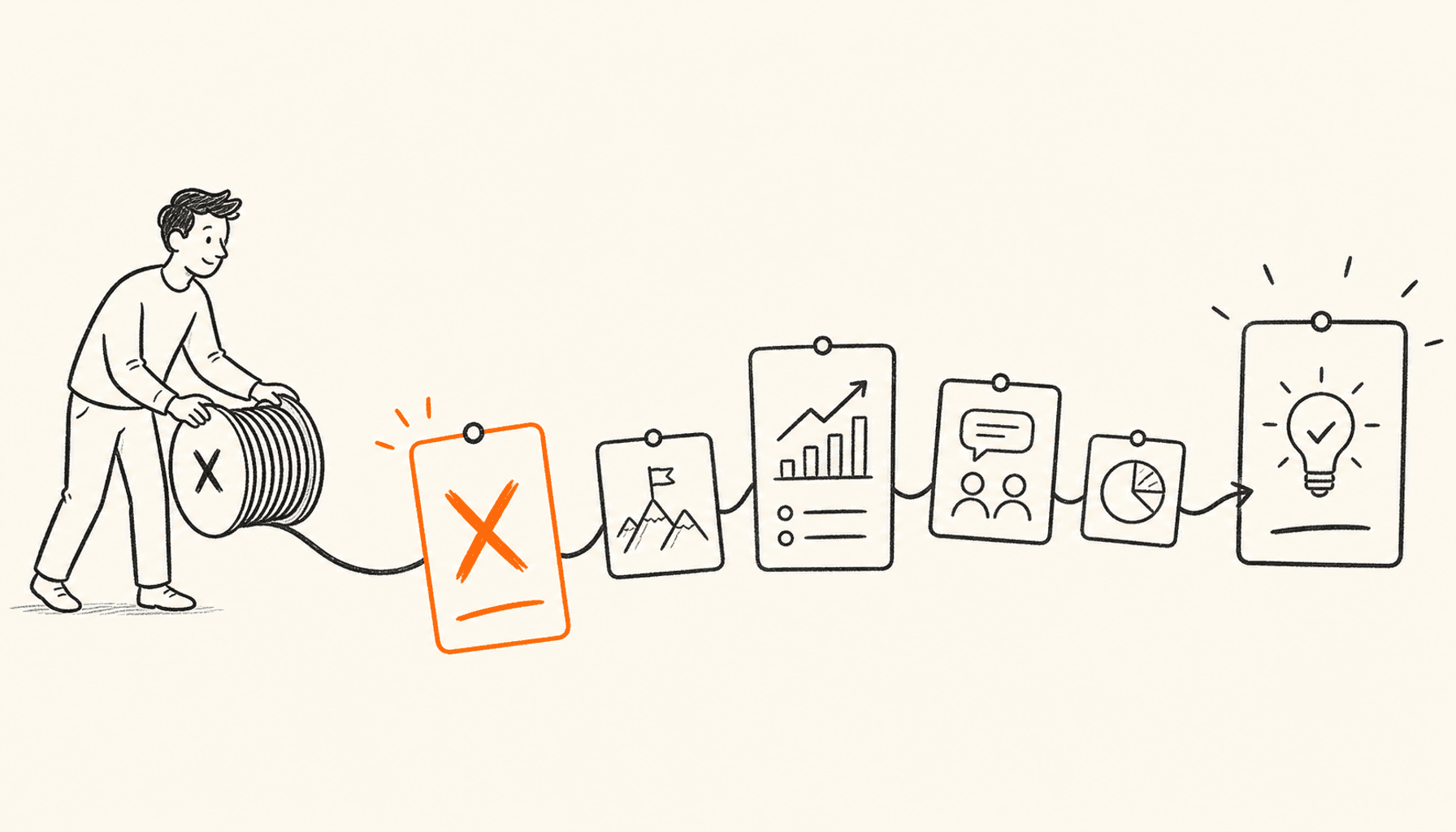
A good X thread makes one promise, earns the next scroll, and ends with a useful conclusion. Start with the reader problem and final takeaway. Outline the few steps or claims needed to connect them. Give each post one job, support claims with evidence, remove repeated setup, and make the thread valuable even when the reader never clicks a link. Use a single post when the idea does not need sequence.
Competitor guides often present threads as a universal growth tactic and fill the page with viral examples. That confuses format with substance. A thread is useful when sequence improves understanding: a case study, process, argument, story, teardown, or collection that needs more than one post.
The goal is not maximum length. It is minimum length for a complete promise. This guide covers structure, hooks, pacing, evidence, editing, publishing, and the situations where a single post is stronger.
Quick comparison
| Part | Job | Failure to avoid |
|---|---|---|
| Opening | State the specific value or tension | A vague promise that could introduce anything |
| Context | Give only what the reader needs | Several posts of autobiography before value |
| Sequence | Advance one step or claim at a time | Repeating the same point in new words |
| Evidence | Make the lesson credible | Invented certainty or screenshots without context |
| Ending | Resolve the promise and name the next action | An abrupt link or generic request to follow |
If you are evaluating the complete workflow rather than one feature, see the X growth tool for SaaS founders page for the product, fit and limitations in one place.
How to create a thread in the X composer
Open the post composer and write your first post. Select the plus control to add the next post, then repeat for each part. Read the sequence and select Post all when you are ready. X documents this flow for the web and mobile apps.
For a thread already published, open it and use Add another post to continue. That adds to the existing conversation; it does not rewrite the earlier posts. Save unfinished work as a draft and keep a separate copy of important text.
Decide whether the idea should be a thread
Use a thread when order matters. The reader should understand post four better because posts one through three came first. Processes, experiments, before-and-after analyses, product decisions, and stories naturally benefit from sequence.
Use a single post when the idea is one observation, question, result, opinion, or concise list. Expanding a complete sentence into eight posts creates friction without adding value.
| Use a thread | Use one post |
|---|---|
| A process with dependent steps | One sharp lesson |
| A case study with method and result | One result with a short caveat |
| An argument requiring evidence | A position that fits with its reason |
| A story with a meaningful turn | A moment that needs little setup |
| A teardown with several distinct findings | One finding worth discussing |
Write the promise and ending before the middle
Write one sentence describing what the reader will understand or be able to do after finishing. Then write the final conclusion. If those sentences do not connect, the thread does not yet have a coherent job.
The outline between them should contain only the steps, claims, or moments necessary to earn that ending. This prevents a common failure where the opening promises a result but the middle becomes a collection of loosely related tips.
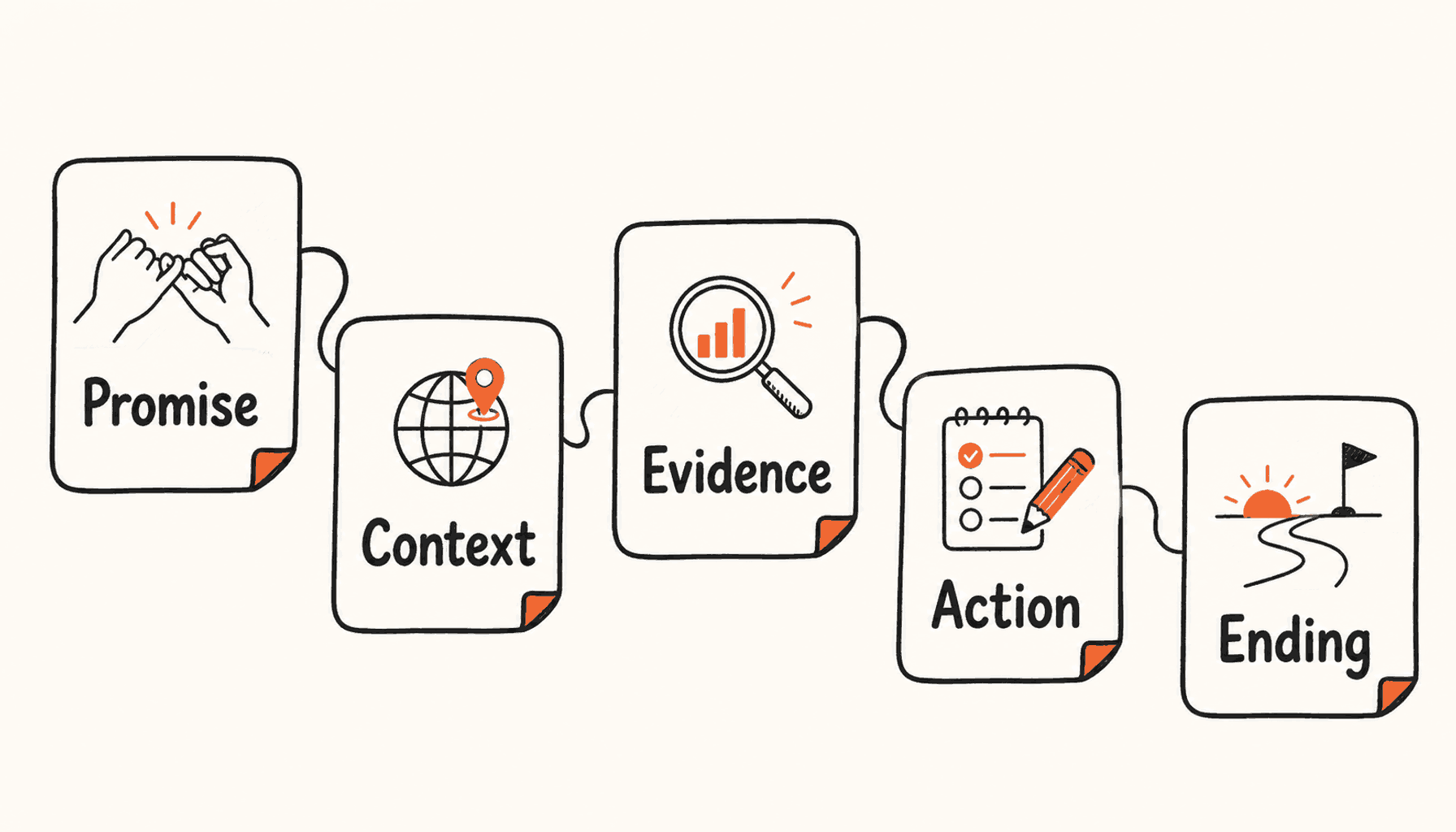
- Promise: the precise problem, change, or question the thread resolves.
- Reader: the person for whom the result matters.
- Evidence: the experience, data, example, or source that makes the lesson credible.
- Sequence: why these points belong in this order.
- Ending: the conclusion, decision, or action the evidence supports.
Build an opening that earns attention honestly
A thread opening needs specificity more than drama. Name the situation, useful outcome, or surprising evidence. Give the reader enough information to decide whether the remaining sequence is relevant.
Avoid hiding the subject behind phrases such as this changes everything, nobody talks about this, or you will not believe what happened. Curiosity works when the missing information is meaningful, not when the opening withholds basic context.
| Weak opening | Stronger mechanism |
|---|---|
| A huge lesson from my startup journey | The onboarding change that moved more testers to first value |
| Ten secrets nobody tells you | Ten decisions behind one measured result |
| This tool changed everything | The repeated job the tool removed and what still required judgment |
| A thread on growth | The exact stage, constraint, and outcome covered |
Give every post one distinct job
A readable thread moves. Each post should introduce a step, evidence point, example, objection, transition, or conclusion. If two adjacent posts have the same job, combine them.
Use enough local context that a post still makes sense when someone encounters it through a reply or repost. Do not repeat the entire thesis, but name the subject where pronouns become ambiguous.
- One claim or step per post.
- Short paragraphs and intentional whitespace.
- Concrete nouns instead of a chain of this, that, and it.
- Evidence next to the claim it supports.
- Transitions only when the logical connection is not already obvious.
Use proof that carries information
Screenshots, charts, examples, and numbers help only when they prove the nearby claim. In Daniel Smidstrup’s 100-post image test, decorative images underperformed in that account while proof images were the important exception. Treat that as an account-specific lesson, not a universal rule.
Crop a screenshot to the relevant evidence, explain the date and denominator, remove private data, and state the limitation. A polished image without context is decoration. A plain table with a clear sample can be stronger proof.
Edit the thread as a sequence, not separate posts
Read only the first sentence of every post. Together they should reveal the argument or story. Then read the final sentence of every post and remove repeated mini-conclusions that slow the sequence.
Check the opening against the ending, delete any post that does not advance the promise, and verify every factual claim. Finally, preview the thread on a narrow screen. Dense blocks feel longer on mobile than they do in an editor.
- Cut repeated context and generic transitions.
- Replace abstract advice with one example or decision rule.
- Verify names, dates, numbers, and external claims.
- Check media order, alt text, links, and privacy.
- Make the ending useful before adding any call to action.
Publish, measure, and reuse the underlying idea
Measure more than opening-post impressions. Look at completion signals available to you, replies that reference later points, bookmarks, profile visits, qualified follows, link clicks, and whether the thread created the intended conversation.
A useful thread can become a blog section, product explanation, customer email, short video, or several independent posts. Repurpose the reasoning and evidence, not a mechanical copy of every sentence.
Frequently asked questions
How many posts should an X thread contain?
Use the fewest posts needed to deliver the promise completely. A focused five-post thread can be stronger than a repetitive 20-post thread. Length should follow the idea, not a growth formula.
What should the first post of a thread include?
State the specific subject, useful outcome or tension, and enough context for the right reader to decide that the sequence is relevant.
Should every X thread have images?
No. Use media when it carries proof, demonstrates a step, or makes information easier to understand. Decorative media can distract from the sequence.
Can I schedule an X thread?
Third-party scheduling tools can schedule threads. Native X capabilities and interface support can change, so check the current composer before relying on a native workflow.
Are threads better than single posts for growth?
Not universally. Threads suit ideas that benefit from sequence. Single posts are often stronger for one observation, result, question, or opinion.
Turn one real lesson into a complete sequence.
Use ClimbX to develop a thread from your own product work, customer evidence, or account learnings, then review every post before scheduling.
Read next
- How to Write Hooks That Stop the Scroll on Twitter - How to Write Hooks That Stop the Scroll on Twitter. A practical guide to what works, what to skip, and how to get started.
- Do AI images hurt your reach on X? I tested it on my last 100 posts. - I ran a small experiment: more images on my posts, many of them AI art. The data from 100 posts: AI illustrations and other decorative images cut reach by 48% on generic posts and 65% on one-liners - while real proof images (payout screenshots, charts, records) gained 78%. The full numbers, the clean split, and the ClimbX feature this experiment killed.
Sources
- X Help Center - Official instructions for creating and adding to a thread.
- Hypefury thread guide - A broad thread-format and scheduling baseline reviewed for useful coverage and stale claims.
- Typefully thread resources - A competing guide used to compare structure and common recommendations.