The short version
If you are looking for an auto follow bot for Twitter or X, you probably want relevant people to notice your account without spending hours finding them. These tools promise to find profiles, follow them, and turn some of those actions into follow-backs. Before connecting one, compare what it actually automates, the quality of those followers, and the account rules it exposes you to. This guide walks through that decision and a more useful growth workflow.
An auto-follow service sells a simple story: follow people while you work, collect follow-backs, and wake up to a larger audience. The missing question is what those new followers actually signed up for.
If someone followed you because a tool followed them first, that tells you very little about whether they care about your ideas. A founder needs attention from people with a relevant problem. The tool's follower count can go up while that problem stays unsolved.
How does an auto-follow bot work?
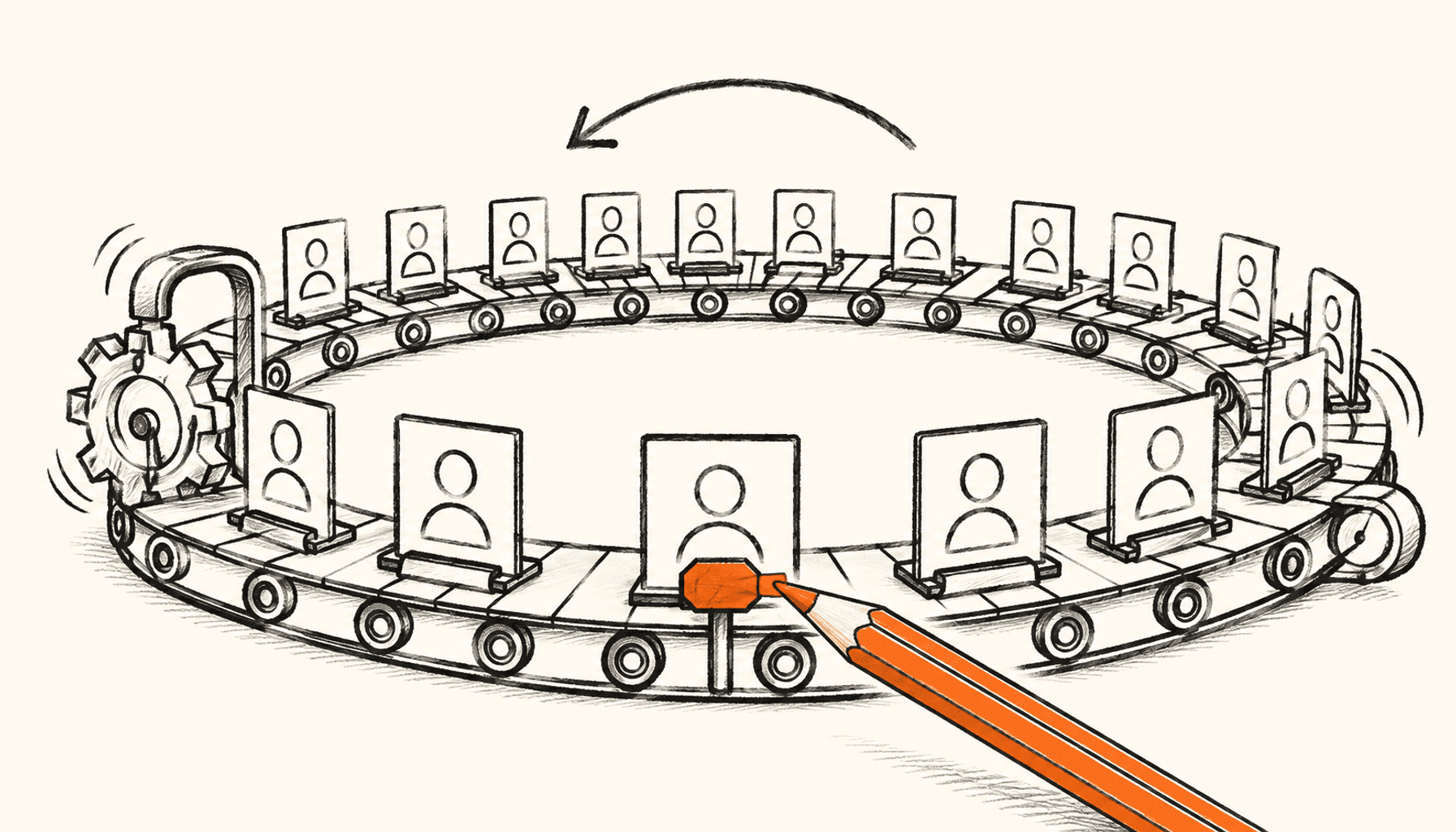
An auto-follow bot takes an audience selection and turns it into account actions. In a typical follow-back campaign, the operator starts with a topic, a search, or another account's audience. The system chooses matching profiles, follows them, checks for reciprocal follows, and may later remove non-reciprocating accounts.
Those steps explain how it works. They are not a setup guide. The key decision is no longer yours: the system picks people because they might follow back, not because you decided their work belongs in your feed.
A targeting filter can narrow the pool, but it cannot tell you who wants to buy. Someone mentioning design in a bio could be a buyer, a student, a competitor, or an inactive account. Even a relevant professional may follow back without wanting the product you sell.
This is also why you should judge a research tool and an action bot differently. A tool that shows relevant accounts or conversations gives you something to consider. A bot that follows people for you ties your account to its activity pattern. Inspect what actually happens after you connect it, not just the word assistant on its homepage.
Can auto-follow get your X account suspended?
Yes. X's following guidance warns that abusive follow behavior can lead to suspension. Its authenticity policy identifies follow churn and indiscriminate following as engagement spam. The rule is about behavior, including attempts to inflate popularity. It does not matter whether a vendor calls its product an assistant.
This does not tell you the odds of a ban for any one account. X does not publish a reliable number for that. The real question is whether you want your account to depend on behavior X clearly restricts.
| Approach | What it actually buys you | Our recommendation |
|---|---|---|
| Auto-follow a competitor's followers | A larger following list without individual selection | Avoid |
| Follow people, then unfollow non-followers | A cycle organized around reciprocal follows | Avoid |
| Follow someone after reading their work | A feed you deliberately chose | Reasonable |
| Create a focused reading list | A repeatable way to learn about a topic | Useful |
| Write something relevant to a specific audience | A reason for that audience to follow voluntarily | Build around this |
Is staying below the follow limit enough?
No. A technical limit is a ceiling on an action, not permission to use that action for spam. X currently lists 400 follows per day in its follow-limit documentation, alongside separate behavioral restrictions. That is not a recommended daily target or a safe auto-follow allowance.
Do not turn this into a search for a smaller magic number. Choosing fewer automated targets does not answer the central question: would you want to follow these people if none of them followed you back?
That question is a better operating rule than a quota. Follow someone because their work is worth reading. Stop when you are no longer making that decision individually.
Why follow-back growth is a weak strategy for founders
There are three practical problems even before enforcement enters the picture. These are our strategic judgments, not claims about secret algorithm penalties.
First, reciprocal attention is ambiguous. A follow-back might mean interest, politeness, or a habit of reciprocating. If you mistake all three for product demand, you can spend months writing for people who were never prospective customers.
Second, an indiscriminate following list makes research noisier. The people you follow influence what you choose to read. Filling that list for a growth tactic gives you more sorting work when you need to understand your market.
Third, the tactic teaches the wrong feedback loop. It encourages you to ask which batch produced the most follows. A useful content process asks which explanation earned a thoughtful question, which example helped someone, and which conversation revealed a problem worth solving.
Imagine a founder selling invoicing software. Following every account that follows a large startup personality can produce a broad mix of investors, students, agencies, and unrelated creators. Publishing a clear example of recovering an overdue invoice gives the right reader a specific reason to pay attention. Neither action guarantees a customer, but only the second tests the product's actual subject matter.
Red flags in an auto-follow service
Treat these promises as reasons to stop and inspect the workflow:
- A guaranteed number of followers with no explanation of why those people would want your content.
- Copying another creator's entire follower list as the default audience strategy.
- Automatically removing people who do not follow back.
- Advertising that the tool looks human or is undetectable.
- Asking you to leave a browser bot running inside your X account.
The last point has a separate policy issue: X's automation rules prohibit non-API automation such as scripting its website. Changing the name of that workflow does not change what it does.
What to do if you already connected an auto-follow tool
- Pause its campaigns and recurring tasks. Record what the tool was configured to do so you can check for unexpected activity.
- Review its access in X's Settings and privacy → Security and account access → Apps and sessions → Connected apps. Remove access you no longer want. X explains the process in its third-party app guide.
- Review your recent follows and account activity. Avoid responding with another bulk automation that tries to undo everything at once. If the follow-backs left you with bot followers, remove them one by one instead.
- If there is an account restriction, read the notice and use the official recovery process. Our suspended-account guide covers the next steps. Do not assume stopping a tool guarantees immediate reinstatement.
If you shared credentials or see unfamiliar sessions, also review account security. Revoking an app and reviewing signed-in sessions are separate steps. Check both.
How to judge audience quality without guessing
Review who is responding and what the response tells you. Total follows are easy to count, but a founder needs to know whether the channel is reaching people with the problem the product solves. A quick look at a profile will not tell you if someone wants to buy. Use it to ask better questions.
| Signal to review | Useful question | What it cannot prove alone |
|---|---|---|
| New followers | Do their public interests overlap with my subject? | That they want to buy |
| Replies | Are people adding relevant experience or asking specific questions? | That every reply is qualified demand |
| Website visits | Does a useful post give readers a reason to explore further? | That visitors understand the offer |
| Signups and conversations | Are people describing the problem my product solves? | That the whole audience has the same intent |
Keep a short weekly note rather than chasing a perfect score. Record one post that attracted relevant discussion, one question you heard repeatedly, and one change to test next. That produces a research loop you can act on even while the account is small.
A better way to find people worth following
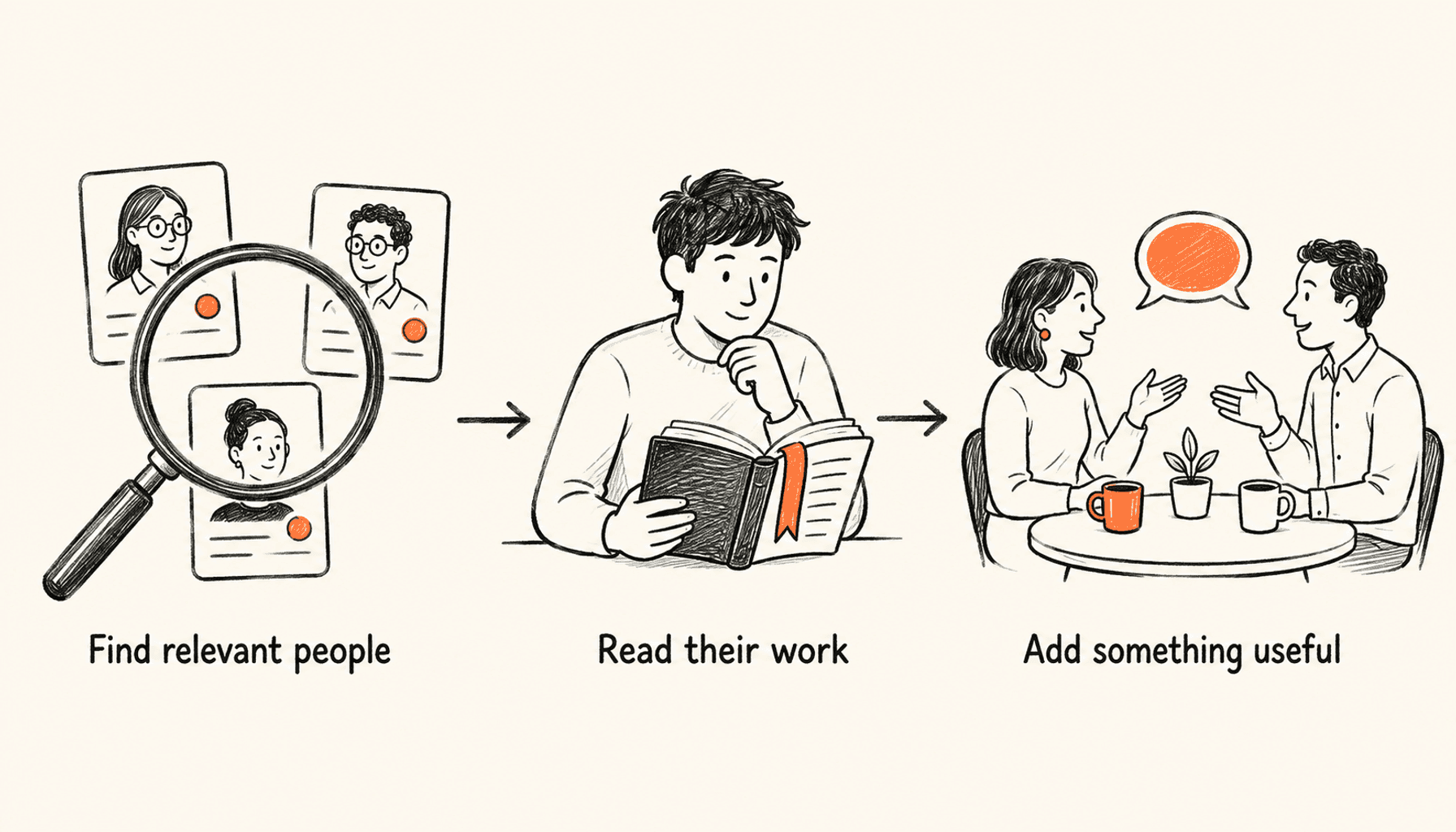
Start with the subject your intended audience already cares about. For an invoicing product, that might be late payments, freelancer cash flow, or client onboarding. Read the conversations before deciding who belongs in your feed.
Choose accounts whose experience improves your understanding. You do not need to agree with every post, and they do not need to be likely to follow back. A potential customer, a practitioner, and a thoughtful critic can each make your research more useful.
Then publish from what you actually know. Explain a decision, show an example, or describe a mistake you can back up. Reply when you can add context to someone else's discussion. Measure useful conversations and relevant visits alongside follows.
For a practical starting point, use our guide to getting your first 100 followers on X. Keep the relationship decisions yours. ClimbX can help with research and drafts. We do not recommend an automatic follow-back loop.
How ClimbX supports the work instead of a follow-back loop
Use ClimbX to reduce preparation work while keeping the relationship decisions yours. Start in Inspiration with a relevant pattern, bring your own example into Studio, and review the draft before publishing or scheduling it. Engage can help surface conversations; read them and decide where your contribution belongs.
For a founder building an invoicing product, the input might be a real question about late payments. The output should be a clear explanation grounded in your experience, not an automatic follow sent to everyone discussing money. After publication, read what people ask and use those questions to improve the next post.
This is the alternative we recommend: software that helps you find material, express an idea, and maintain a rhythm. ClimbX does not promise a fixed follower increase or immunity from enforcement. It supports a process through which relevant people can choose to pay attention.
Start your ClimbX trial to research ideas, draft in your voice, and schedule your next post. Already have an account? Sign in to ClimbX. You can also explore the ClimbX workflow for founders or start with the free AI tweet generator. A draft you can check is a useful first step. You do not have to hand over your following list.
Build an audience around ideas worth following.
Use ClimbX to find relevant inspiration, draft in your voice, and schedule posts you have reviewed. Keep the conversations and relationship decisions yours.
Frequently asked questions
Are all automated follows covered by the same rule?
The relevant rules specifically address bulk, aggressive, or indiscriminate behavior and follower manipulation. Our recommendation is broader: do not use an auto-follow service as your audience-building strategy. That is a product judgment, not a claim that every conceivable programmatic follow has identical policy treatment.
Is manual follow/unfollow churn safer?
Doing it manually does not make follower manipulation a sound strategy. The purpose and pattern still matter. Follow people for their work, rather than making a reciprocal follow the condition for keeping them in your feed.
Can paying for X Premium make auto-follow safe?
Do not treat a paid subscription as permission for a growth tactic. Evaluate the underlying behavior against the same rules and avoid vendor claims of guaranteed protection.
Does ClimbX recommend auto-follow tools?
No. We recommend research, useful original posts, deliberate engagement, and reviewing what your audience responds to. Follower count should be an outcome of that work, not something manufactured by an unattended follow/unfollow loop.
Read next
- Twitter (X) Automation: Tools, Rules, and Better Workflows - Compare Twitter automation workflows: scheduled posts, AI drafts, automated replies, and follow bots. Learn what X permits and where human review matters.
- Buy Twitter (X) Followers: What to Know Before You Pay - Thinking about buying Twitter or X followers? Understand what follower packages deliver, account risks, and alternatives for attracting people who care.
- Buy Twitter (X) Likes: What to Know Before You Pay - Considering buying Twitter or X likes? Learn what like packages deliver, how they affect your feedback, and alternatives for reaching relevant readers.
- Twitter (X) Engagement Pods: How They Work and Alternatives - Considering a Twitter engagement pod? Learn how reaction groups work, how they differ from peer feedback, and what to check before joining.
- Copy Viral Tweets: What Works and What to Do Instead - Want to copy a viral tweet to grow on X? Learn which structures you can study, why copied posts disappoint, and how to create an original version.
- How to Grow on X in 2026: The Complete Playbook - An evidence-backed guide to growing on X in 2026: profile, content, replies, cadence, analytics, the algorithm, and a 30-day plan.
Sources
- Following limits and behavior - Official documentation checked September 5, 2026.
- Authenticity policy - Official documentation checked September 5, 2026.
- Automation rules - Official documentation checked September 5, 2026.
- Third-party app access and sessions - Official documentation checked September 5, 2026.