The short version
Buying Twitter likes promises to make a quiet X post look popular. Before you order, separate the number a seller can deliver from the attention you actually want: the right readers, good questions or interest in your product. This guide covers how bought likes work, the risks, and a better way to improve your next post.
A post with few likes stings. You put time into it, and the idea matters to your business. The small number under it feels like a public verdict. A seller offers to fill the gap.
Before you pay, ask what you wanted the post to do. Get good questions? Get people to look at a demo? Explain a product decision? A like package cannot tell you if any of that happened. This guide shows why that matters and what to do with a weak post instead.
What does buying likes actually change?
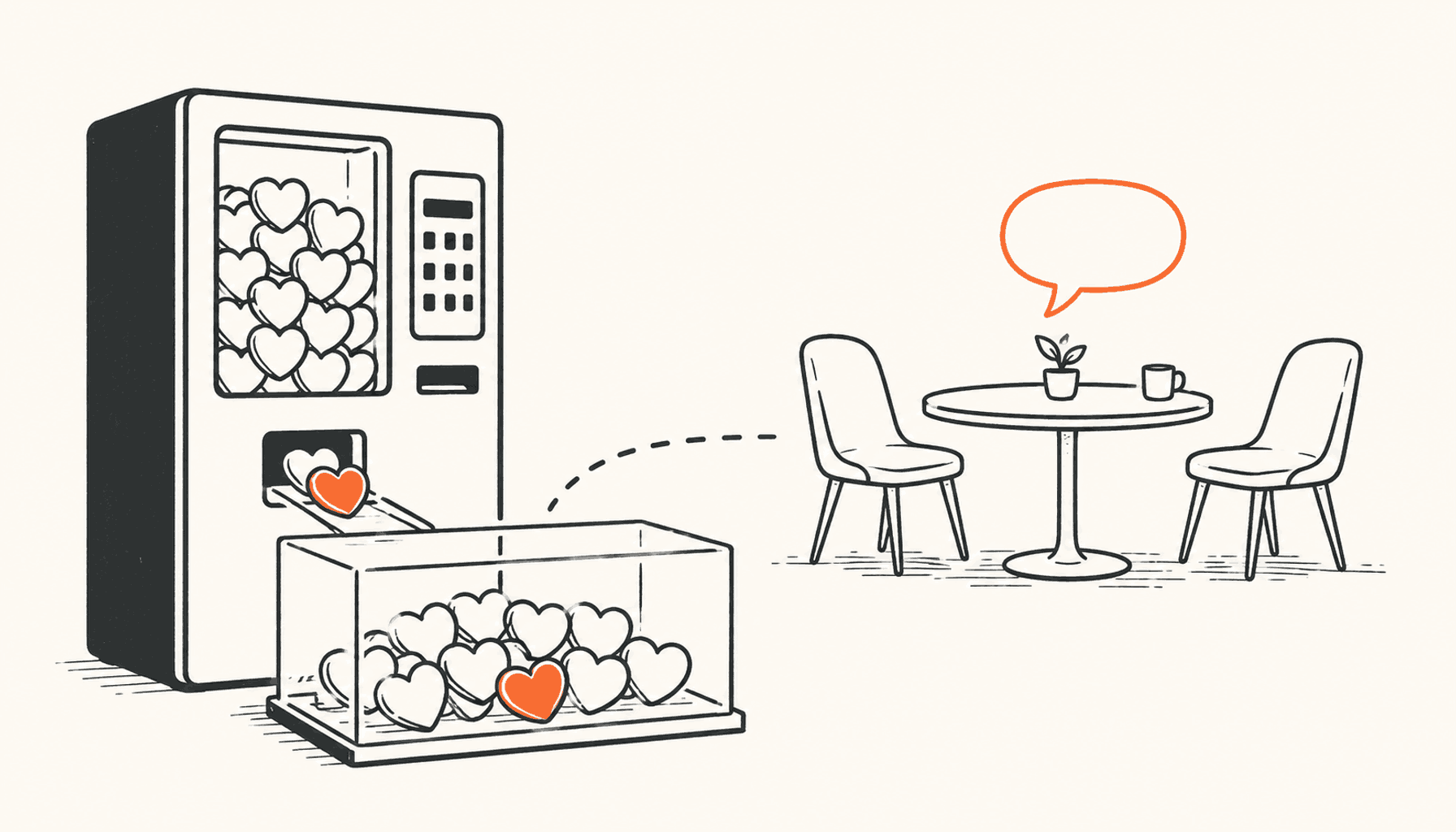
It changes a number. It may also change how the post looks to someone scrolling past. Neither one means the right people understood the idea or wanted the next step.
Sellers may promise real accounts, slow delivery or likes from a certain country. None of that tells you why someone pressed Like. A like that was paid for tells you nothing about how people felt about the post.
| Signal | What you can reasonably infer | What you cannot infer alone |
|---|---|---|
| Purchased likes | A paid activity may have been delivered | Genuine interest or customer demand |
| Voluntary likes | Some readers chose to react | That they understood or will buy |
| Specific replies | People have something to ask or contribute | That all discussion is commercially relevant |
| Qualified website actions | A reader took the next step you offered | That the post caused every later outcome |
Does X allow buying likes?
X's authenticity policy bans paying others to pump up engagement, likes included. X's Premium FAQ also says fake engagement meant to game the system is against its rules. Paying for Premium does not give you permission to buy engagement.
So there is a written rule, but no known ban rate. We do not claim every purchase gets you suspended. No seller can promise you are safe either. Skip it because it fakes your feedback and breaks a written rule.
Will bought likes make the algorithm promote my post?
Do not count on it because a seller says so. The like count is only one of many things X looks at when it recommends a post. We have no proof that bought likes help a post rank.
Even if the post got seen a bit more, the real question stays open. Did the right people read it, get it and respond? Buying the reaction does not tell you.
A better test is to change something you control: the example, the explanation, the reader you write for or the next step. Write down what you changed and watch the response. Buy likes at the same time and you can no longer read the result.
How purchased engagement spoils your feedback
Say a founder tries two ways to explain a new onboarding feature. The first gets a handful of real questions. The second gets a batch of bought likes and no questions. Sort by likes and the second one wins. But the first told you far more about what future users need to know.
That mistake spills into next week's posts. You repeat the wrong angle. You ask an assistant to copy it. You decide your audience wants a topic it never picked. The bad report is one problem. The bad decision it leads to is the bigger one.
Mark any paid or faked activity in the stats you keep. Do not use those counts to claim a hook or format worked on its own. Where you can, learn from posts where you know where the response came from.
What if the post really deserved more attention?
It might have. Few likes do not prove the post was bad. Maybe your audience is small. Maybe the opening was unclear, the timing was off or you asked too much. One post may not give you a clear answer at all.
Read the post as the reader you wrote it for. Does it name the problem before your product shows up? Is the example specific enough to be useful? Does it assume knowledge the reader does not have? Can they get the main point without opening a link?
Then pick one fix. For example, swap a vague announcement for a clear before-and-after with real details. Do not keep reposting the same thing until the number looks better. Write a follow-up that adds something new.
A better response to a weak post
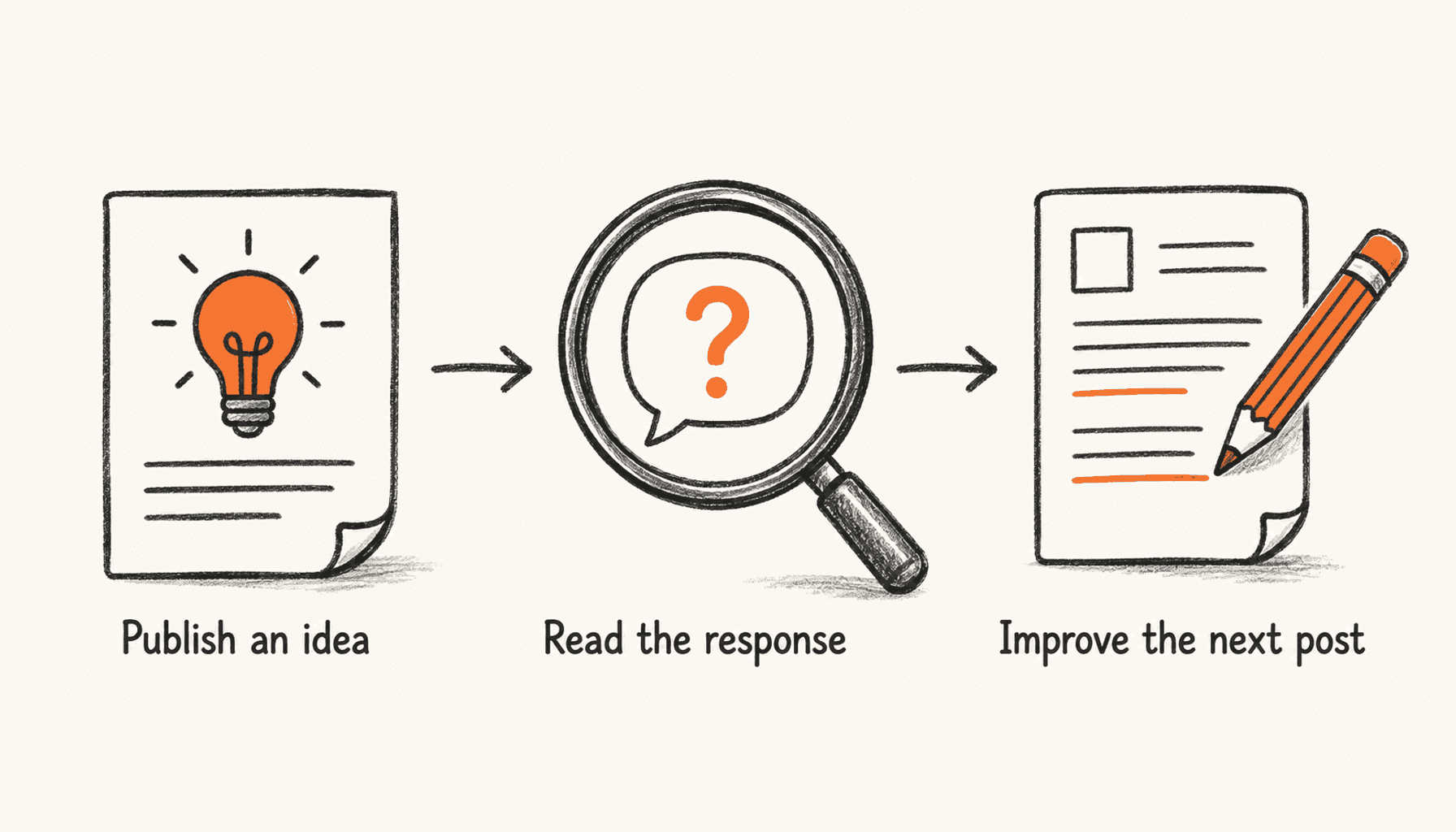
- Write down who the post is for and what it should do. Keep that apart from the number of likes you hoped for.
- Read the actual replies. One detailed question from the right person can point to your next post or demo.
- Fix the weakest part: topic, opening, explanation, proof or next step. Pick one change you can name.
- Post the new version at a pace you can keep. Join conversations where it helps.
- Look at several posts together. Do not turn one good or bad result into a rule.
This routine helps you learn. It will not make you go viral. You may find a topic only helps a small group, or that your offer needs to change. Both tell you more than a bought like count.
Where ClimbX fits
Use Inspiration to find examples in your niche. Figure out why they work before you copy the shape. Bring your own proof into Studio and try a few ways to explain it. Check what it says, keep the words yours and schedule the version you stand behind.
Engage helps you find conversations to read. Reply when you have something to add. Your post does not need a burst of activity around it. Then use the results to pick better questions and follow-ups.
ClimbX does not sell engagement. It cannot promise a post will take off. It helps you prepare and post more steadily. AI drafts the posts, and you edit and approve what goes out. See the ClimbX workflow for founders, or test an idea with the free AI tweet generator before you decide what to post.
What to do if you already purchased likes
Stop repeat orders and check any app you gave access to. X's third-party app guidance shows how to remove access and check your sessions. If the seller only needed a link to your post, there may be no app access to remove.
Note which posts got bought likes. Leave them out when you judge what works. Buying more will not fix a weak result. Deleting a post will not undo a penalty from X.
If X sent you a restriction notice, follow the steps in it. If you were actually suspended, start with the account suspension guide. There is no reset button that turns faked engagement into real feedback.
Make the next post more useful, not just more liked.
ClimbX helps you find ideas, try drafts in your voice and schedule the posts you approve. Learn from real readers instead of bought reactions.
Frequently asked questions
Are likes from real accounts acceptable to buy?
No. Paid likes are still paid, even from real accounts. What counts is how and why the likes were bought. A profile photo and an old account history do not change that.
Are ads the same as buying likes?
No. An ad shows your post to people, and they choose how to react. A like package buys the reaction itself. Ads still have to follow the rules and bring in enough results to be worth the money.
Is a low like count proof that my content is bad?
No. Reach, the right audience, clarity and timing all affect likes. Look at what data you have and compare several posts before you decide.
Can ClimbX guarantee more likes?
No. ClimbX helps you research, draft, schedule and learn from your results. The goal is better posts and attention from the right people. Nobody can promise a like count.
Read next
- Auto Follow Bot for Twitter (X): How It Works and Alternatives - Looking for an auto follow bot for Twitter or X? See how follow-back tools work, what to check before connecting one, and an alternative for relevant growth.
- Twitter (X) Automation: Tools, Rules, and Better Workflows - Compare Twitter automation workflows: scheduled posts, AI drafts, automated replies, and follow bots. Learn what X permits and where human review matters.
- Buy Twitter (X) Followers: What to Know Before You Pay - Thinking about buying Twitter or X followers? Understand what follower packages deliver, account risks, and alternatives for attracting people who care.
- Twitter (X) Engagement Pods: How They Work and Alternatives - Considering a Twitter engagement pod? Learn how reaction groups work, how they differ from peer feedback, and what to check before joining.
- Copy Viral Tweets: What Works and What to Do Instead - Want to copy a viral tweet to grow on X? Learn which structures you can study, why copied posts disappoint, and how to create an original version.
- How to Grow on X in 2026: The Complete Playbook - An evidence-backed guide to growing on X in 2026: profile, content, replies, cadence, analytics, the algorithm, and a 30-day plan.
Sources
- X authenticity policy - Official documentation checked September 5, 2026.
- X Premium FAQ - Official documentation checked September 5, 2026.
- X third-party app access and sessions - Official documentation checked September 5, 2026.